1528+
MWp Capacity435+
Projects1528+
MWp Capacity435+
Projects1528+
MWp Capacity435+
Projects1528+
MWp Capacity435+
Projects
1528+
MWp Capacity435+
Projects1528+
MWp Capacity435+
Projects1528+
MWp Capacity435+
Projects1528+
MWp Capacity435+
Projects
Most energy yield losses at solar plants do not come from major failures. They come from small, undetected faults that accumulate silently over months. After working with developers and asset owners across Vietnam, Electric Bird has seen this pattern consistently: by the time a performance drop shows up in monthly reports, the degradation has already been underway for a long time.
This is exactly why modern solar O&M is shifting from scheduled visual inspections toward data-driven monitoring. The combination of thermal cameras and SCADA system integration gives both engineers and asset managers a structured, quantitative view of plant health, and more importantly, the ability to act before losses compound.
Visual inspection or spot electrical measurements only capture plant condition at a single point in time. Many panel faults develop gradually over months before they produce any visible change in output. By the time a performance ratio (PR) decline appears in the data, the opportunity for low-cost intervention has usually passed.
The financial consequence is straightforward: delayed fault detection means the plant operates below its expected yield curve, compressing project IRR and extending the payback period.
Early-stage hotspots, initial PID (Potential Induced Degradation) onset, and string-level yield imbalances are routinely missed during standard inspections. Left unaddressed, these faults accelerate overall degradation and shorten asset lifespan. In solar asset management, the cost of correcting a fault in its early stage is always significantly lower than remediating a fault that has spread across multiple modules or strings.
Without reliable performance data, O&M teams default to reactive maintenance rather than condition-based scheduling. This inflates OPEX without producing proportional gains in plant performance, a problem that becomes more severe as plant capacity scales up.
Thermal cameras detect abnormal heat distribution across panel surfaces even when aggregate electrical parameters such as current, voltage, and output power are still within acceptable ranges. This early detection capability is one of the most operationally valuable features in solar panel inspection.
Common fault signatures identified through thermal imaging include:

PID does not cause an immediate, visible output drop. A thermal camera, used as part of a structured solar panel inspection workflow, can identify abnormal heat zones before electrical monitoring registers any anomaly. This is one of the most compelling arguments for integrating thermal imaging into preventive maintenance protocols.
Thermal cameras reveal symptoms, not root causes. Without supporting operational data, engineers risk misinterpreting environmental effects as technical faults, or vice versa.
A hotspot in isolation tells you something is wrong. It does not tell you whether the cause is a cell defect, partial shading, a wiring issue, or a bypass diode failure. This is where SCADA system integration becomes essential.
Effective SCADA system integration enables continuous comparison of output across strings and inverters operating under equivalent irradiance conditions. Strings showing abnormal yield deviation are flagged for priority field inspection, converting what would otherwise be a broad, time-consuming site survey into a targeted diagnostic exercise.
This approach directly reduces the labor cost and downtime associated with O&M activities.
Historical data from SCADA system integration allows O&M teams to clearly distinguish between:
This is the operational foundation of data-driven O&M, where maintenance decisions are grounded in trend analysis rather than reactive fault response.
One of the most valuable capabilities of SCADA system integration is pattern recognition across operational data streams. Anomalies in string output, temperature-corrected yield, and inverter behavior can be identified well before the inverter logs a fault code, giving the O&M team a lead time to investigate and intervene.
Effective solar panel inspection does not begin with deploying equipment on site. It begins with data analysis. Experienced O&M teams consistently spend significant time in the control room reviewing operational data before committing resources to field work.
SCADA system integration narrows the inspection scope based on operational logic rather than blanket site coverage. Priority data layers to analyze before field deployment include:
When a string shows a clear output deficit relative to neighboring strings under identical conditions, that is the trigger for targeted thermal inspection.

A thermal camera delivers real diagnostic value when deployed against a defined scope built from SCADA system integration data. Thermal inspection should not be a broad sweep of the entire plant. It should follow a scenario built from the data.
During field inspection, engineers focus on:
Thermal data reveals surface symptoms. SCADA operational data reveals performance impact. When these two data streams are compared, the O&M team can accurately identify the root cause rather than treating symptoms.
Practical diagnostic examples:
This cross-referencing process is what separates accurate fault diagnosis from guesswork, and it prevents the common O&M error of treating the wrong cause.
The difference between a routine technical inspection and professional asset management lies in what happens to the data afterward. SCADA system integration combined with thermal camera inspection is not a standalone activity; it is part of a long-term operational strategy.
When operational data is accumulated and analyzed consistently over time, the O&M team can:
For solar asset owners, this translates directly into better OPEX control, more predictable cash flows, and protected long-term ROI.
SCADA system integration combined with thermal imaging is no longer an advanced option for large-scale plants. It is the operational standard for any asset owner who takes yield protection seriously.

Electric Bird supports investors and asset owners with data-driven O&M solutions built around SCADA system integration, thermal camera diagnostics, and deep field experience, converting technical findings into operational and investment decisions that protect asset value across the full project lifecycle.
Contact Electric Bird today to discuss how we can support your solar asset’s performance and long-term returns.
No. Thermal cameras support early fault detection, but field verification is still needed to confirm root cause and guide corrective action.
Frequency depends on plant scale and operating conditions, but typically, every 6 to 12 months is the recommended interval.
Yes. Even for C&I rooftop systems, SCADA operational data enables early detection of yield degradation that would otherwise go unnoticed until losses become significant.
SCADA shows performance metrics but cannot identify physical faults at the module level. Thermal inspection is needed alongside SCADA data for complete diagnostic accuracy.
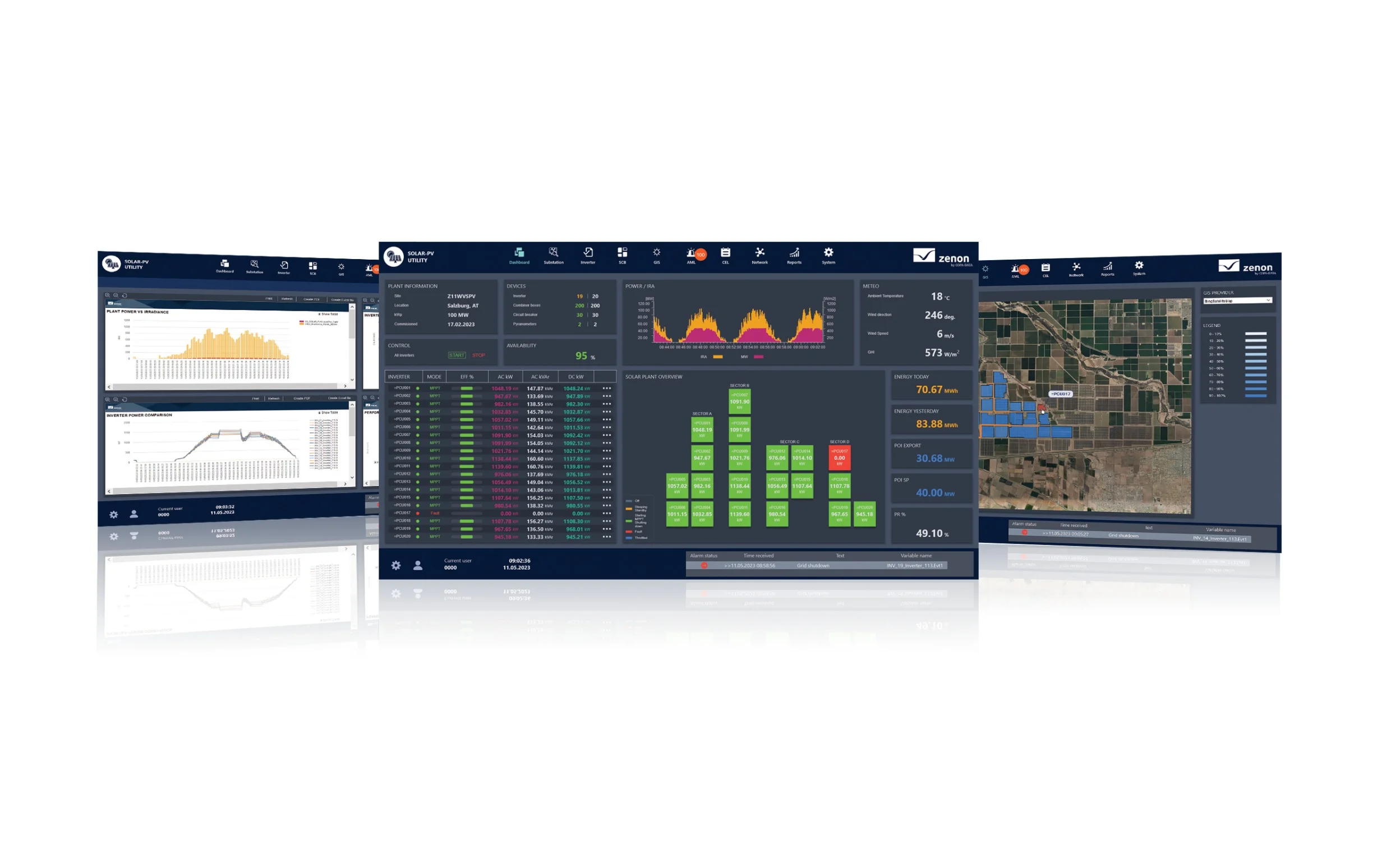

During the investment and operation of solar power plants, many businesses confuse monitoring with SCADA. While both serve the purpose of system oversight, these two platforms differ significantly in terms of functionality, control capabilities, and operational support. For large-scale projects in particular, understanding the role of SCADA in a solar power system helps investors optimize […]

In the digital energy era, managing a solar power plant goes far beyond reading basic performance metrics. An AI-integrated SCADA control system shifts the entire operational model from passive data collection to active predictive intelligence, giving asset owners a decisive edge in protecting long-term returns. From Reactive Monitoring to Predictive Intelligence Most conventional SCADA control […]
Most solar panel businesses reach commercial operation and immediately shift focus to the next project. The system is running, the inverters are green, and the monthly report shows output. But here is the uncomfortable reality: a system can appear operational while silently losing 5 to 15 percent of its annual yield, and the owner never […]