1528+
MWp Capacity435+
Projects1528+
MWp Capacity435+
Projects1528+
MWp Capacity435+
Projects1528+
MWp Capacity435+
Projects
1528+
MWp Capacity435+
Projects1528+
MWp Capacity435+
Projects1528+
MWp Capacity435+
Projects1528+
MWp Capacity435+
Projects
Choosing the wrong solar panel installation companies is one of the most expensive mistakes a business owner can make. A well-selected EPC contractor keeps your system generating consistently for 25 to 30 years. A poor choice, on the other hand, erodes energy yield, drives up maintenance costs, and stretches your payback period well beyond projections.
So how do you separate the qualified from the risky? This guide gives you a practical, technical checklist built from over a decade of hands-on solar project experience.
The decision is not just about installation quality on day one. It shapes the entire operational lifecycle of a significant capital asset.
A professional solar company delivers:
In contrast, working with underpowered solar panel installation companies typically results in output degradation, frequent downtime events, and O&M costs that escalate sharply over time. From an asset management perspective, the contractor you choose is the single biggest variable you control before commissioning.
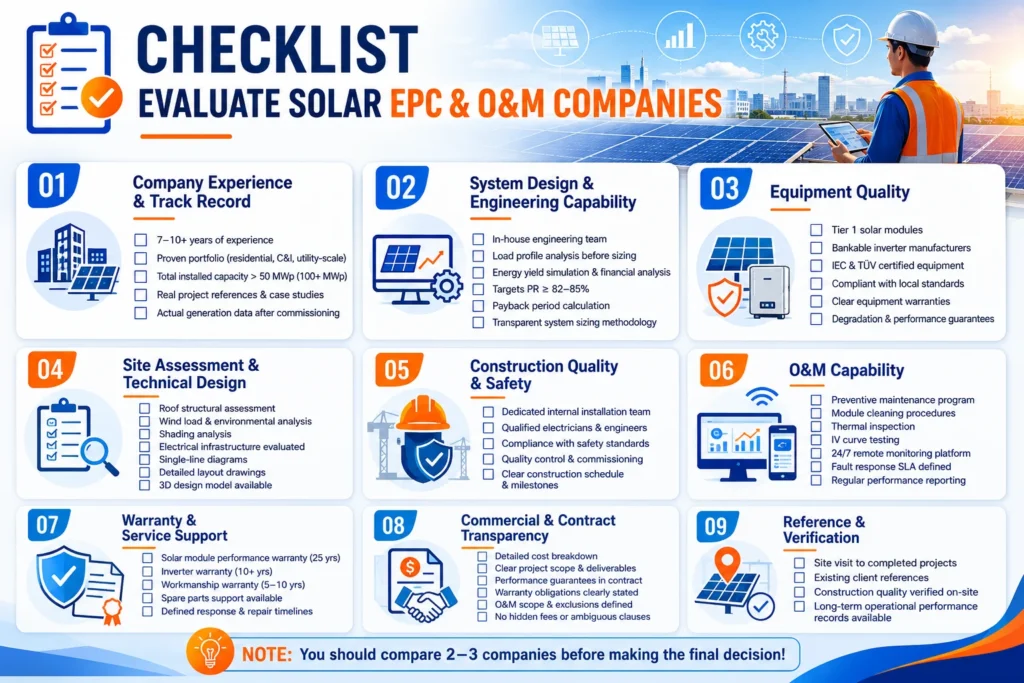
Experience in the solar energy industry is not interchangeable with age in a company. What matters is the depth and scale of completed projects. When vetting any contractor, request:
Stock photos and generic testimonials are not evidence. Ask for documentation.
The design phase is where long-term performance is either locked in or compromised. Strong solar panel installation companies maintain an in-house engineering team capable of:
If a contractor cannot walk you through their design methodology in quantitative terms, that is a gap worth investigating.
Equipment quality is not a preference; it is a financial decision that affects O&M cost structure for the entire 25 to 30-year asset horizon. Systems built with substandard components degrade faster and generate higher unplanned maintenance expenses.
Qualified solar panel installation companies specify only Tier 1 equipment from established manufacturers:
All equipment must carry international certifications including IEC and TÜV Rheinland, and must comply with Vietnam’s national standard TCVN 7447-7-712. Only with properly certified equipment can you maintain low O&M costs and minimal downtime across the asset lifecycle.
A reliable long-term operating system always starts with a thorough site survey and engineering design. If this stage is skipped or rushed, problems surface in operations. Competent EPC solar companies follow a structured four-step process:
Any contractor unable to produce this documentation is not an engineering-grade installer, regardless of how they present themselves.

Post-commissioning O&M quality determines whether your system maintains its performance trajectory over time. This factor is frequently underweighted during vendor selection, yet it has a direct and measurable impact on investment return. A complete warranty and O&M offer from credible solar panel installation companies should include:
Transparent pricing and well-structured contracts allow you to control both financial and operational risk across the project lifecycle. When reviewing any proposal, verify:
For businesses making a first-time solar investment, the most reliable way to assess a contractor is direct observation. Request a visit to an active construction site or a recently completed installation.
A professional construction site will demonstrate:
Strong construction execution is the foundation for stable, efficient solar operations over the asset life.

Many underperforming systems trace back to a poor initial contractor selection. Recognize these warning signs early:
If a contractor cannot meet the basic transparency standards above, the risk to your long-term asset value is significant.
Electric Bird is a full-service EPC solar contractor with over 10 years of hands-on experience in system design, construction, and long-term operations. Unlike contractors who compete primarily on upfront cost, Electric Bird structures every solution around long-term asset performance and return on investment.
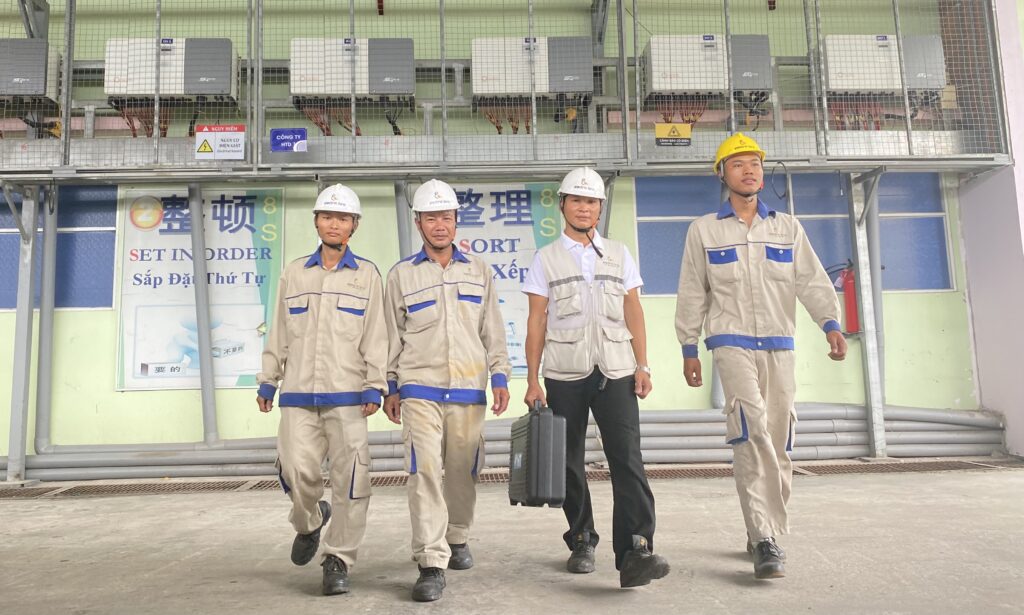
Key differentiators in Electric Bird’s approach:
If you are evaluating solar panel installation companies for a business or industrial facility, Electric Bird offers the technical depth and project track record to protect your investment from day one.
Contact Electric Bird for a technical consultation and a solution designed around your specific asset.
Reputable contractors commit to a Performance Ratio (PR) in the contract, typically between 82 and 85%. If the system underperforms against this benchmark, the contractor is obligated to remediate or compensate according to the agreed terms.
The most critical factor is comprehensive capability spanning design, construction, and long-term O&M. Beyond Tier 1 equipment, you need to evaluate the contractor’s construction process, warranty structure, and capacity to provide sustained technical support over the asset’s operational life.
A full EPC solar company (design, supply, construction) combined with ongoing O&M services is the stronger model. It creates clearer accountability, tighter schedule control, and substantially reduces the risk of operational problems post-commissioning.
Absolutely. Compare at least two to three contractors across experience, equipment quality, detailed pricing, warranty terms, and O&M capabilities. Price alone is a poor selection criterion; long-term O&M competence is what protects the value of your asset.
A minimum of 7 to 10 years in the solar energy industry is a reasonable baseline, but cumulative installed capacity and documented project performance are stronger indicators than years in business alone.
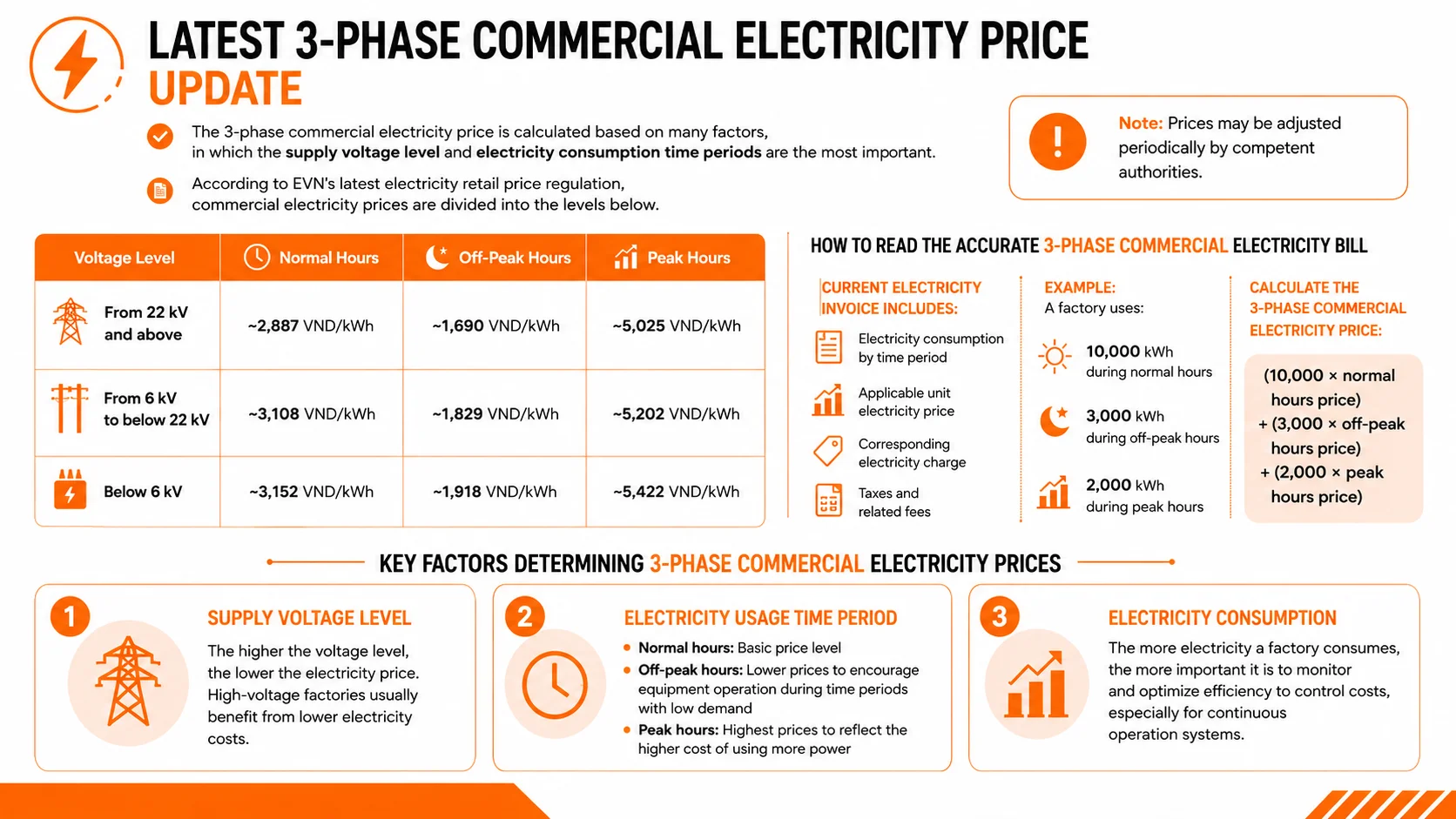

The 3-phase commercial electricity tariff in Vietnam is structured around voltage level and time-of-use billing, which means your monthly electricity bill is not fixed. It shifts based on when and how much power your facility draws. Understanding this structure is the first step toward meaningful cost control. What Is Commercial Electricity? Key Sectors That Use […]

For industrial facilities in Vietnam, electricity is one of the largest recurring operational expenses, especially for production lines running around the clock. Understanding how the Vietnam industrial electricity tariff is structured allows factory managers and asset owners to control costs, optimize production scheduling, and make informed decisions about energy investments. The short answer: your monthly […]
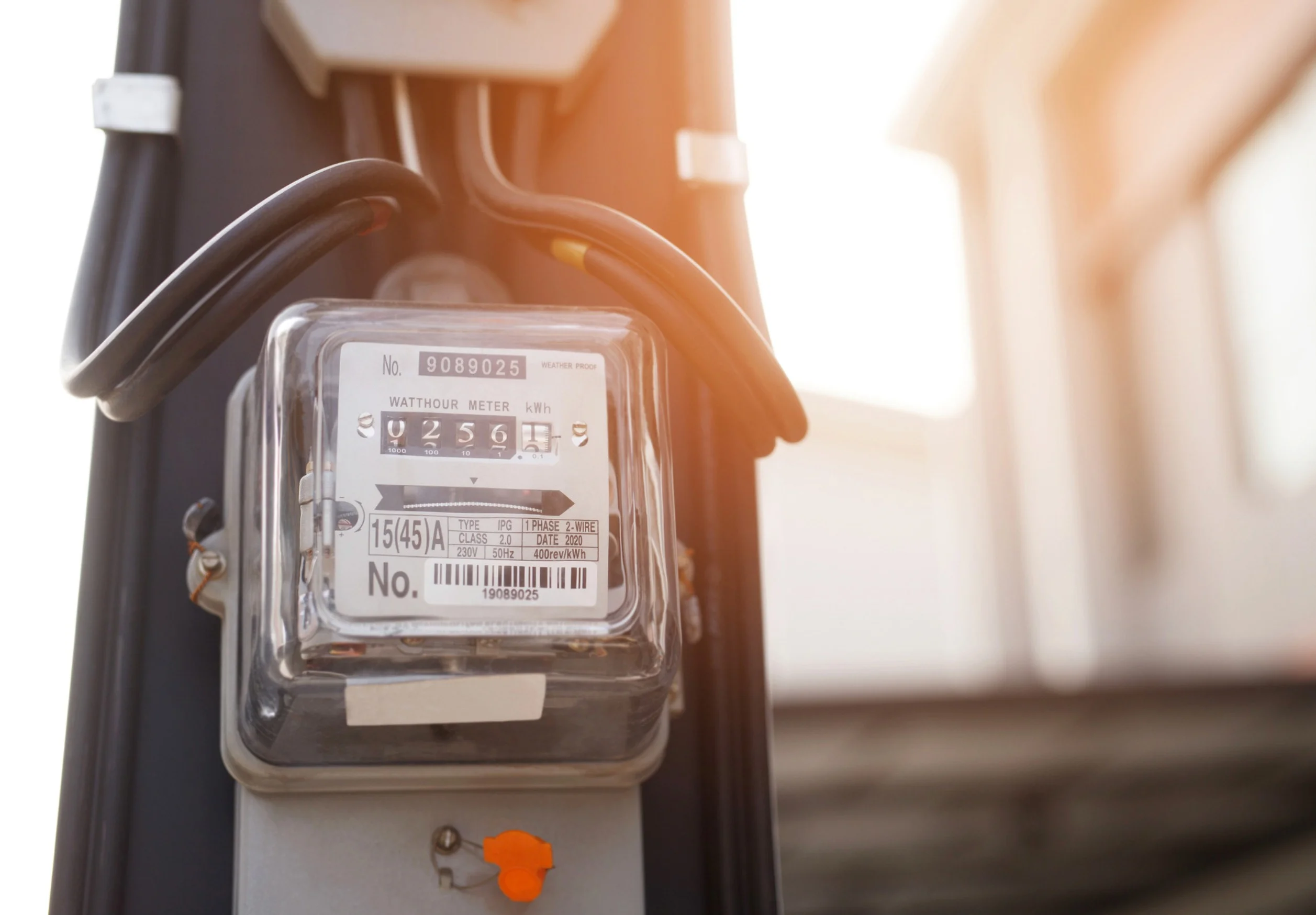
Understanding peak electrical hours is a practical advantage for any facility manager or business owner. Knowing exactly when demand spikes allows operations teams to reschedule high-draw equipment, reduce strain on the grid, and meaningfully cut monthly energy costs over the long term. What Are Peak Electrical Hours and When Do They Occur? Peak electrical hours […]