Commercial Solar Panels: 3 Factory Solutions Compared
As energy costs become increasingly volatile and pressure to optimize production expenses grows, the decision around factory power installation is no longer just about “keeping the lights on.” Businesses today need to treat their energy infrastructure as a long-term asset, one where every design and operational decision directly affects financial returns (IRR) and ongoing operating costs (OPEX).
What Does a Commercial Solar Panel System for Factories Actually Include?
A properly designed factory power system consists of three core layers:
- Core infrastructure: Main switchboards (MSB), distribution boards (DB), power cabling, and cable trays.
- Support systems: Industrial lighting, earthing, lightning protection, and SCADA-based monitoring.
- Energy source layer: Grid supply (utility), backup generators, or renewable sources such as commercial solar panels.
Understanding how these layers interact is essential before choosing any installation model. A system may appear operational on the surface while quietly underperforming against its design baseline.
The Real Cost Problem in Factory Power Management
In factory operations, electricity is not just an expense item. It is a direct determinant of system availability. Any interruption, even lasting only a few minutes, can disrupt production lines and cause cumulative output losses, particularly in continuous-process industries such as food processing, textiles, and electronics manufacturing.
In practice, many systems show no critical faults while simultaneously experiencing gradual performance degradation against their design baseline. Short but recurring downtime events, though easy to overlook individually, accumulate into significant production losses over a full operating cycle. This is the definition of underperformance, and it is often invisible without proper monitoring.
The goal for asset owners should not be “the system is running fine.” The goal should be: sustaining asset performance throughout a 20 to 25-year operational life.
3 Factory Power Installation Models: How They Compare
Grid-Only Power Supply
Overview
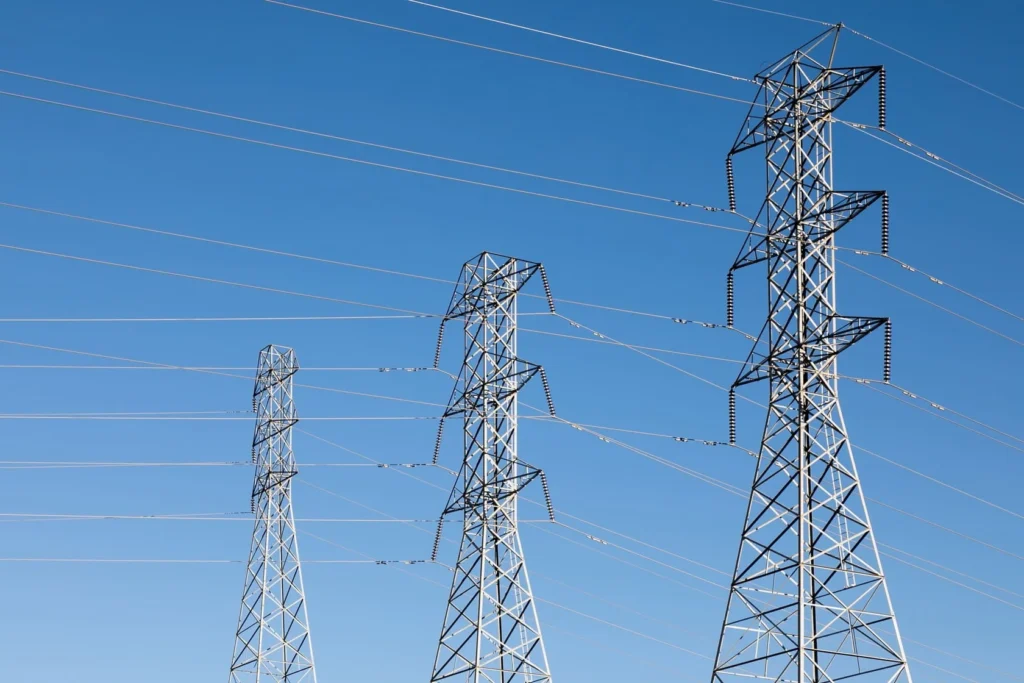
This model relies entirely on the national utility grid, with no on-site generation capacity.
Best suited for:
- Small to medium-sized businesses, especially those leasing factory space for less than five years
- Operations with limited CAPEX budgets and relatively stable or modest load profiles
Advantages
The primary advantage is low initial investment, as no on-site generation infrastructure is required. Design and installation are straightforward, with no need for specialized energy asset management capability.
Risks and Limitations
Because the system is fully dependent on grid supply, the business has no control over long-term electricity costs. OPEX will rise in line with utility tariff increases and actual consumption. More critically, any grid-side fault puts the factory into reactive response mode, increasing downtime risk. Small but repeated outages can generate significant cumulative production losses.
Key Technical Requirements
The system must be sized correctly to the actual load, with appropriate protection and switchgear selection. Cable routing and insulation quality must meet long-term operational standards to prevent overload conditions and progressive insulation degradation.
Solar Rooftop for Factories (On-Grid, Zero Export)
Overview
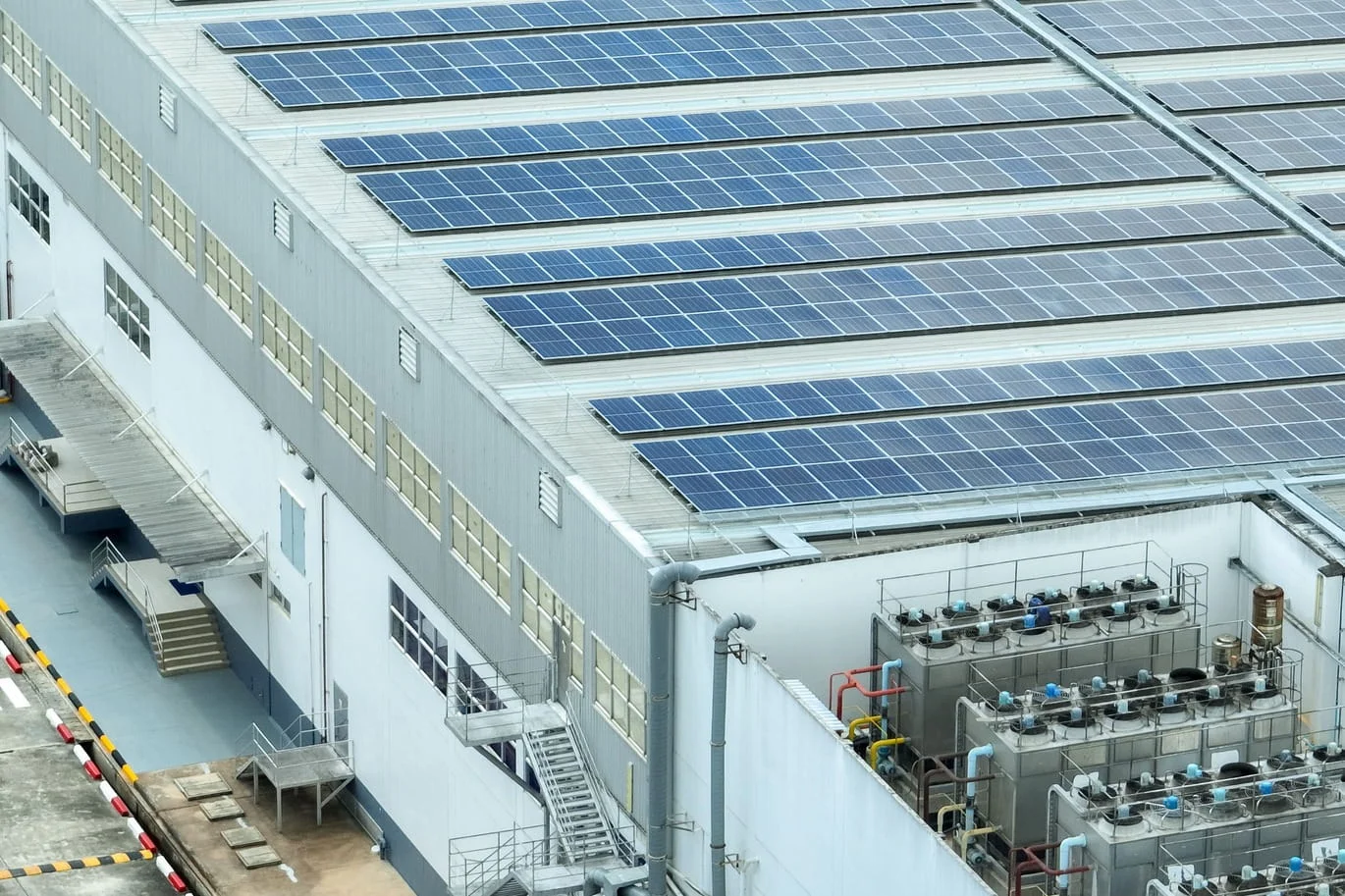
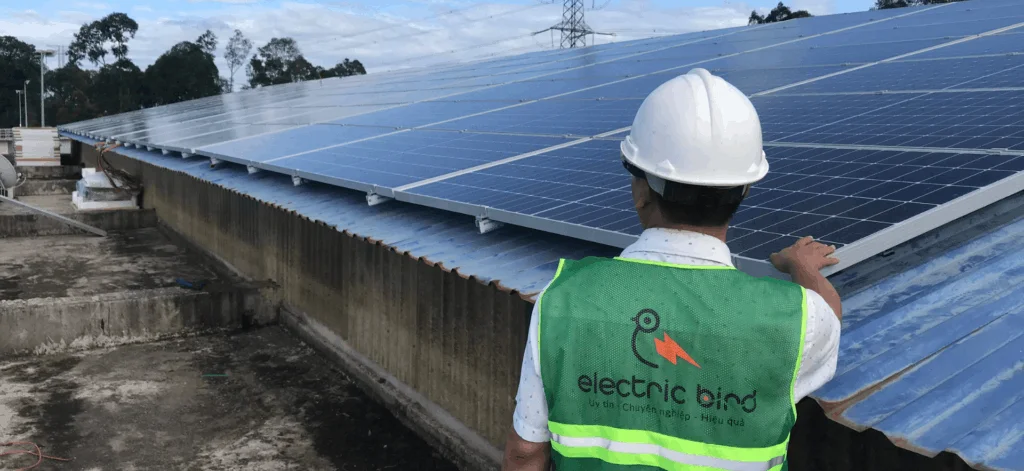
This model leverages available roof area to install a solar rooftop factory system, typically operating under a Zero Export configuration to maximize on-site self-consumption.
Best suited for:
- Manufacturing plants with daytime-heavy load profiles, such as textile mills, mechanical workshops, and food processing facilities
- Facilities with sufficient roof area and a clear long-term occupancy horizon
Advantages
Commercial solar panels in a rooftop configuration can significantly reduce electricity costs during peak production hours. Beyond cost reduction, solar rooftop systems support carbon footprint reduction and help manufacturers meet ESG compliance requirements from international buyers and investors. With a properly managed system, operational life extends to 20 to 25 years, delivering strong IRR for asset owners.
Risks and Limitations
System performance depends heavily on irradiance conditions and the quality of the original design. Without rigorous quality control, common issues include:
- String mismatch losses from poor layout design
- Localized hotspot formation, leading to gradual cell-level degradation
- Sustained underperformance against design output, with no visible fault alerts
A frequently overlooked risk is the failure to distinguish between weather-driven production variability and technical degradation. Without tracking the Performance Ratio (PR) against a verified baseline, factory owners cannot reliably determine whether output loss is seasonal or symptomatic of an underlying system fault.
Key Technical Requirements
Installation quality is the starting point, not the finish line. A well-executed solar panel deployment for commercial buildings must include:
- Layout optimization to minimize mismatch losses across strings
- Baseline establishment in year one to define expected performance
- Ongoing PR monitoring as the primary performance metric
- SCADA integration for trend analysis and early anomaly detection
Without these elements, the system may continue operating while silently degrading, generating less revenue and delivering a lower IRR than projected at the time of investment.
Hybrid System: Commercial Solar Panels + Grid + BESS
Overview
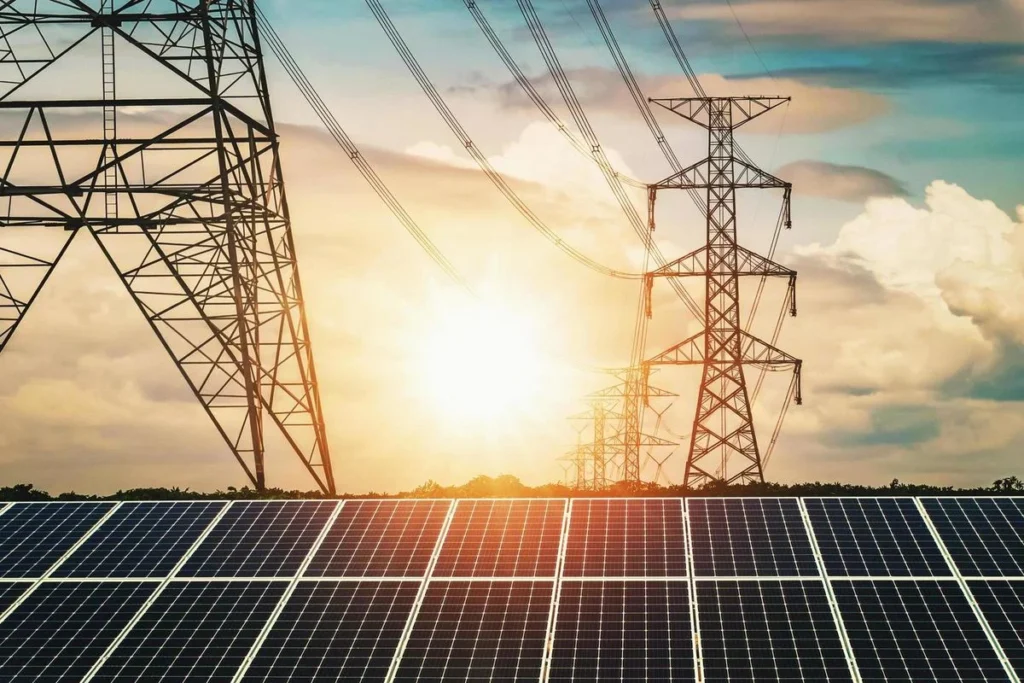
This model integrates grid supply, on-site commercial solar panels, and battery energy storage (BESS) through a hybrid inverter architecture, creating a fully integrated energy management system.
Best suited for:
- High-reliability operations such as electronics component manufacturing, medical device production, and cold chain storage facilities
- Any plant where even brief downtime causes disproportionate financial or operational damage
Advantages
The hybrid model gives asset owners active control over their energy supply. Peak shaving through BESS dispatch reduces demand charges, while the combined system significantly improves overall availability. The plant can maintain operations during grid outages, removing the single point of failure that exists in grid-only setups.
Risks and Limitations
CAPEX is substantially higher, and the system requires advanced data management capability to perform as designed. Without proper analytics, the storage dispatch strategy may be suboptimal, and the IRR case built at investment approval may not be realized in practice.
Key Technical Requirements
Operating a hybrid system correctly requires more than monitoring the inverter status. Asset owners should ensure:
- Performance analysis is conducted by string and by season, not just at the aggregate level
- Inverter thermal conditions are actively managed to prevent derating during peak irradiance periods
- Maintenance shifts from calendar-based scheduling to condition-based monitoring, in line with SLA availability commitments
Side-by-Side Comparison of 3 Factory Power Models
| Criteria | Grid Only | Solar Rooftop | Hybrid + BESS |
|---|---|---|---|
| Initial Investment (CAPEX) | Low | Medium | High |
| Operating Cost (OPEX) | High, variable | Low | Lowest |
| Cost Control | None | Partial | High |
| System Availability | Grid-dependent | Irradiance-dependent | Highest |
| Downtime Risk | High | Medium | Low |
| Long-Term Financial Performance | Margin erosion | Strong IRR | Full optimization |
Choosing the Right Model for Your Operation
No single factory power model suits every business. The optimal choice depends on load profile, facility tenure, budget constraints, operational objectives, and risk tolerance.
- For grid-only setups, this approach suits smaller manufacturers or short-term lease operations where minimizing CAPEX takes priority over long-term energy cost control. Businesses selecting this path must accept exposure to rising utility tariffs and uncontrolled downtime risk.
- For solar rooftop systems, the model performs best where load demand is concentrated in daylight hours. The financial case is strongest when asset owners establish a verified performance baseline in year one and use PR monitoring to distinguish between irradiance variability and technical faults. Without this discipline, underperformance can go undetected for months or years, quietly eroding the expected IRR.
- For hybrid systems, this model is justified where operational continuity is non-negotiable. The investment thesis holds when the cost of downtime, measured in lost production, product spoilage, or contractual penalties, exceeds the incremental cost of storage infrastructure.
Electric Bird: Commercial Solar Panel Solutions for Vietnamese Factories
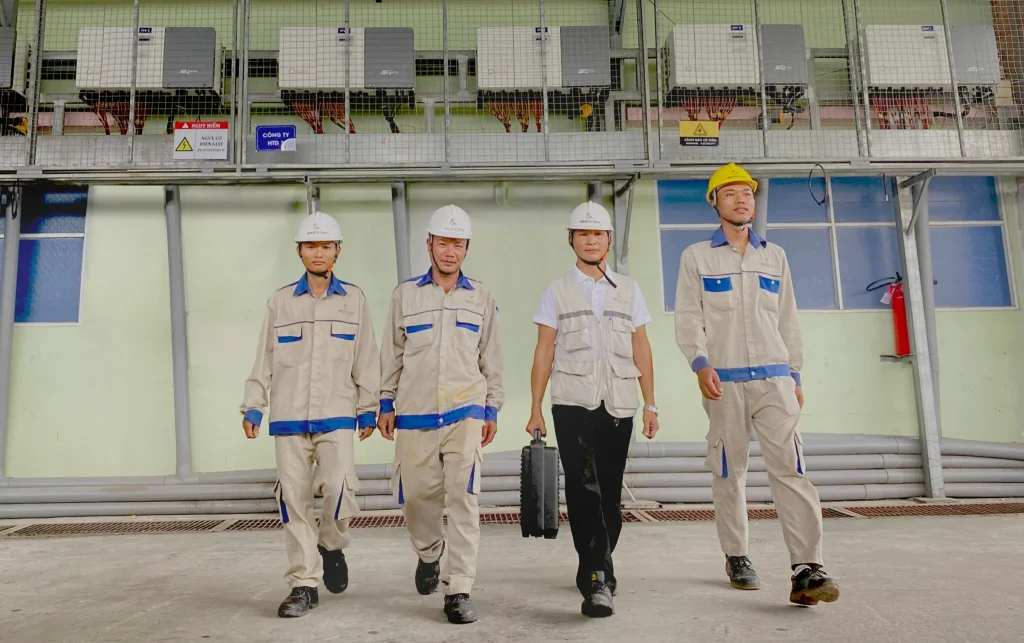
Electric Bird takes a different approach from traditional installation contractors. Rather than focusing solely on build quality at commissioning, the company’s methodology centers on sustaining energy asset performance throughout the full operational life of each system, with particular depth in solar rooftop factory operations.
System design at Electric Bird is driven by actual load data to minimize performance degradation risk from the outset. SCADA is deployed not just as a status display tool, but as a trend analysis platform to detect early signs of underperformance before they materialize into measurable losses.
If your business is looking to reduce electricity costs, improve system efficiency, or reassess your current energy model, Electric Bird is a partner worth engaging.
Contact Electric Bird today for a technical consultation on commercial solar panel solutions tailored to your facility.
Frequently Asked Questions about Commercial Solar Panels for a Factory
Should I choose a solar rooftop or a hybrid system for my factory?
The decision depends on your uptime requirements and cost control goals. Solar rooftop is effective for reducing daytime OPEX, while hybrid systems suit facilities that cannot tolerate any supply interruption.
How long does it take to recoup the investment in commercial solar panels for a factory?
Payback period varies by system size, load profile, and local tariff rates. Most well-designed factory solar systems achieve financial breakeven within four to six years, with an operational life of 20 to 25 years under proper asset management.
How can I tell if my factory power system is performing efficiently?
Do not rely on the absence of fault alerts. Track technical KPIs including PR, system availability, and downtime frequency. A system is performing to standard only when these metrics remain stable within design thresholds or contracted SLA limits.
What is the main risk of a solar rooftop system for factories?
The most common risk is sustained underperformance that goes undetected, typically because PR is not being monitored against a verified baseline. This silently reduces energy yield and degrades the IRR of the asset over time.
Are commercial solar panels suitable for factories with nighttime production shifts?
On their own, solar panels generate power only during daylight hours. Factories running night shifts will need either a hybrid system with BESS or a supplementary grid connection to ensure a continuous supply.