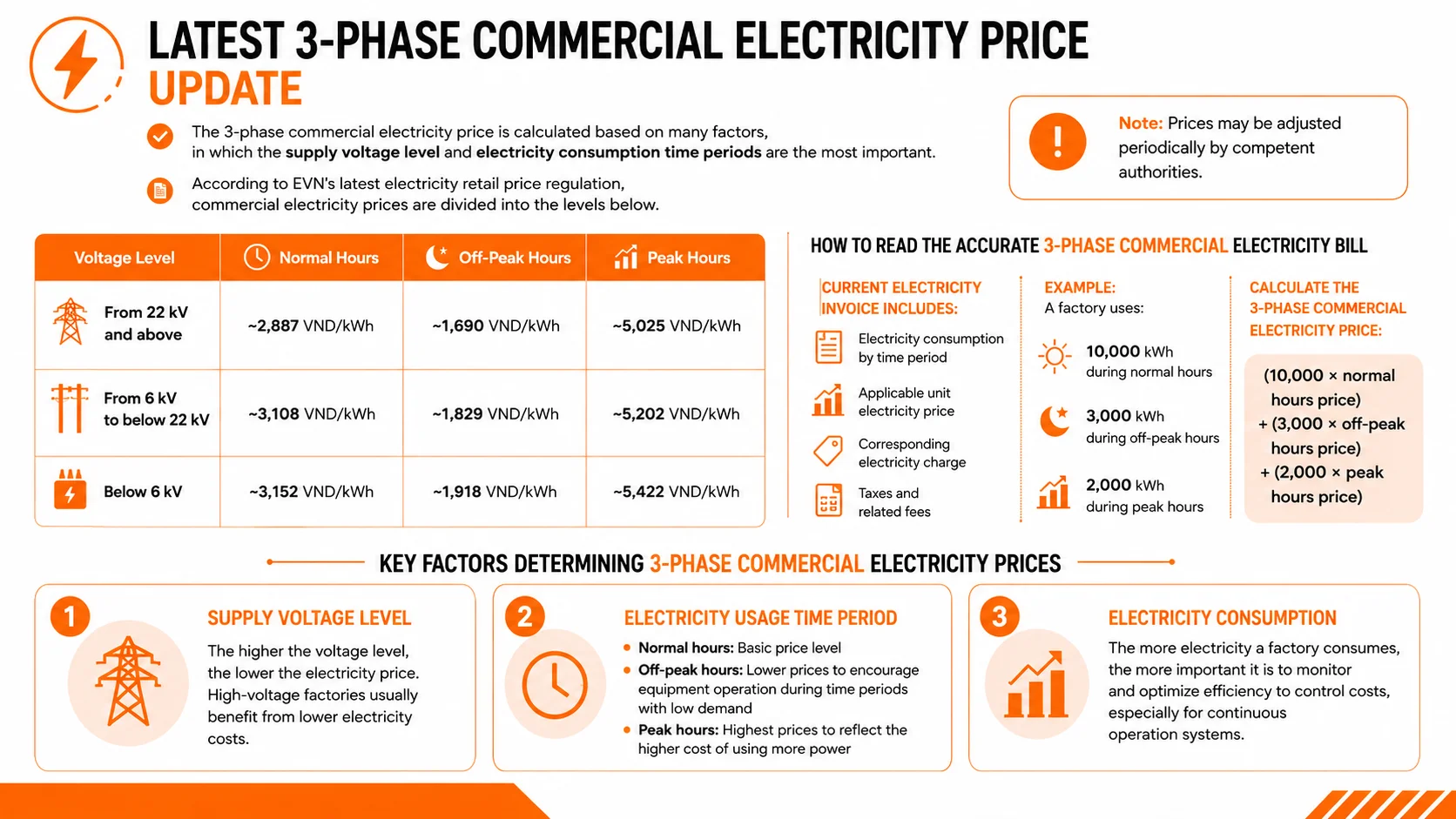
3-Phase Commercial Electricity Tariff: Latest Update 2026
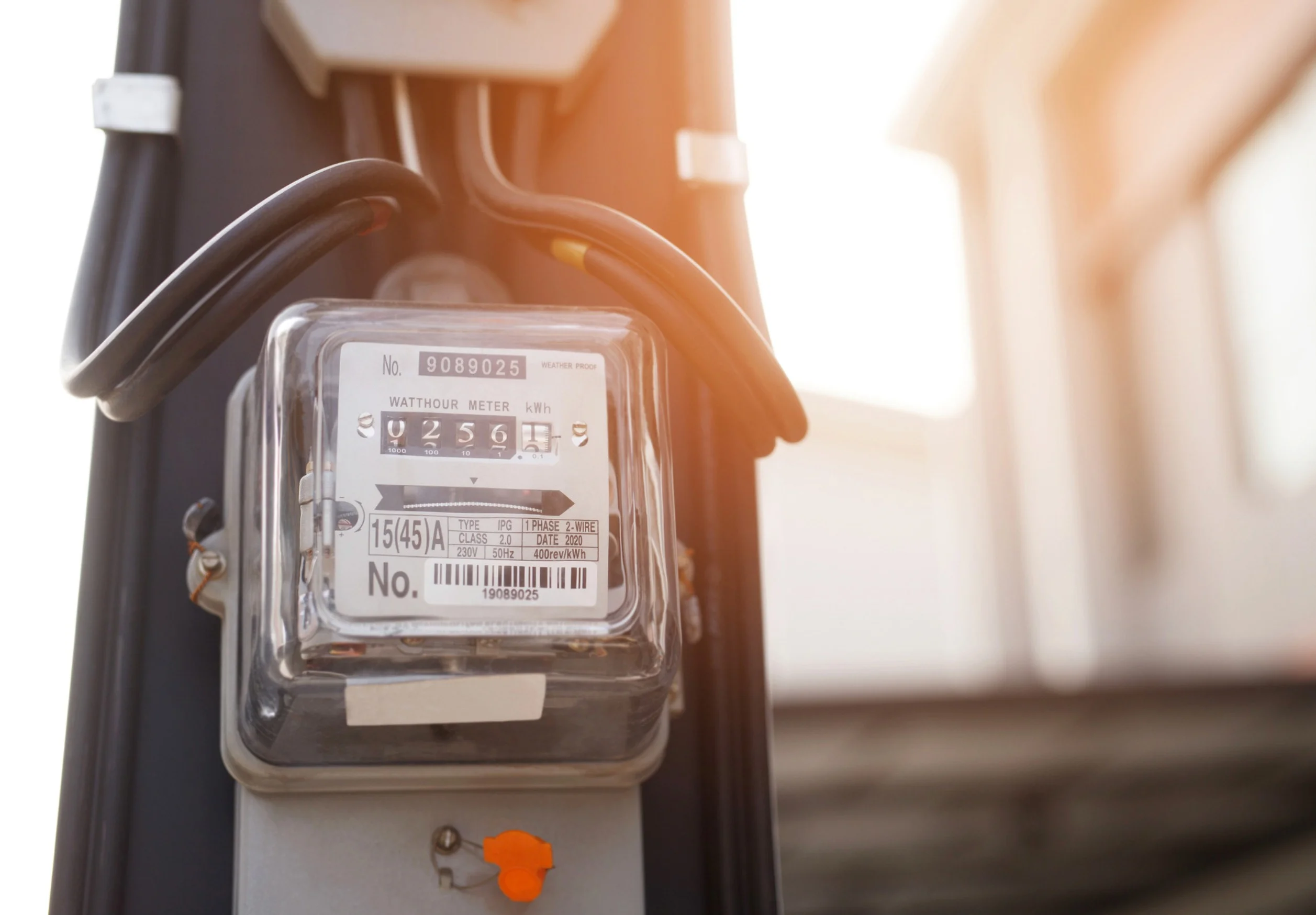
The 3-phase commercial electricity tariff in Vietnam is structured around voltage level and time-of-use billing, which means your monthly electricity bill is not fixed.

Explore the latest solar energy news, market developments, technical insights, and practical tips for solar system owners and businesses. Discover now!
The 3-phase commercial electricity tariff in Vietnam is structured around voltage level and time-of-use billing, which means your monthly electricity bill is not fixed.
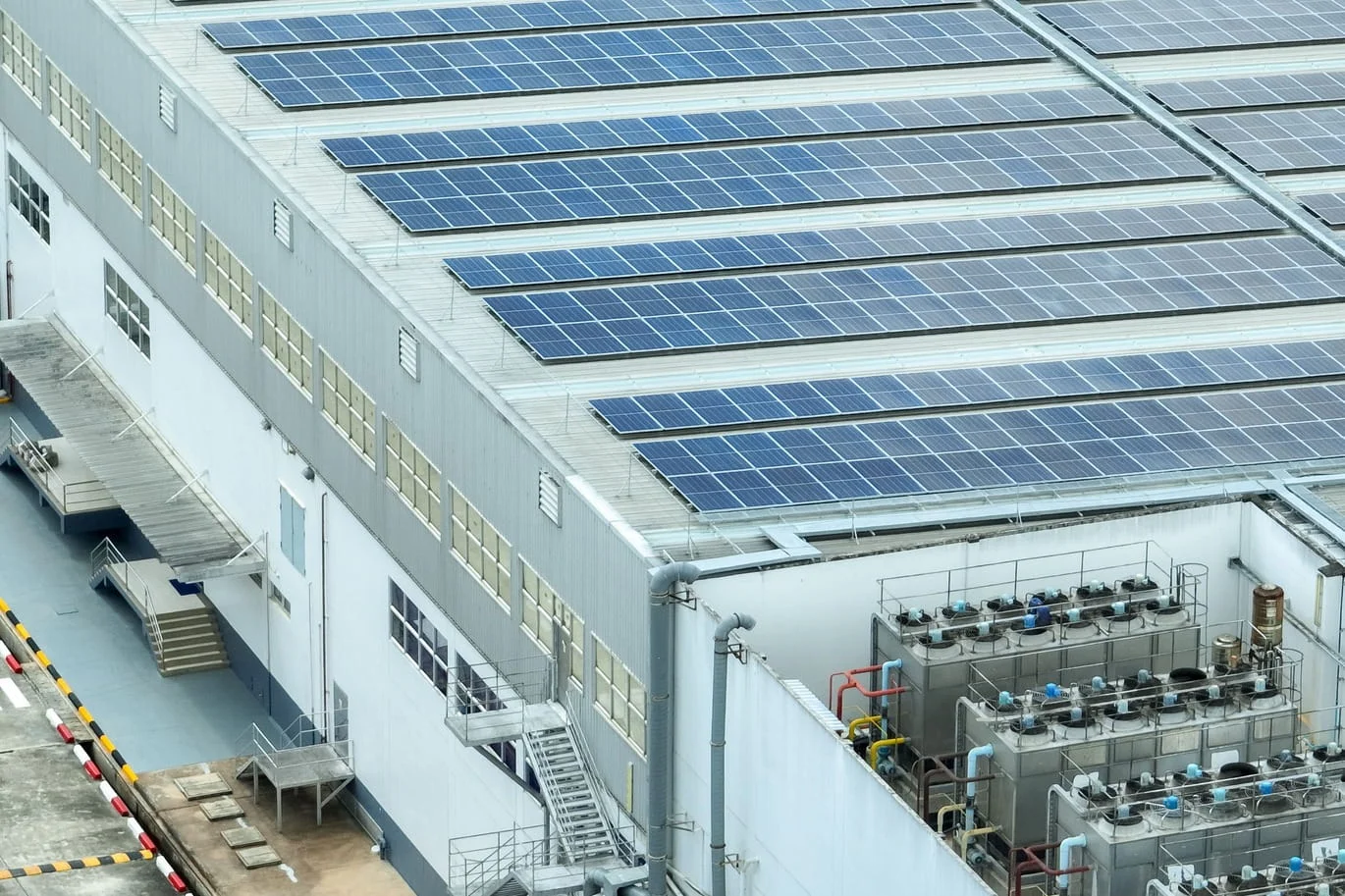
For industrial facilities in Vietnam, electricity is one of the largest recurring operational expenses, especially for production lines running around the clock.
Understanding peak electrical hours is a practical advantage for any facility manager or business owner.
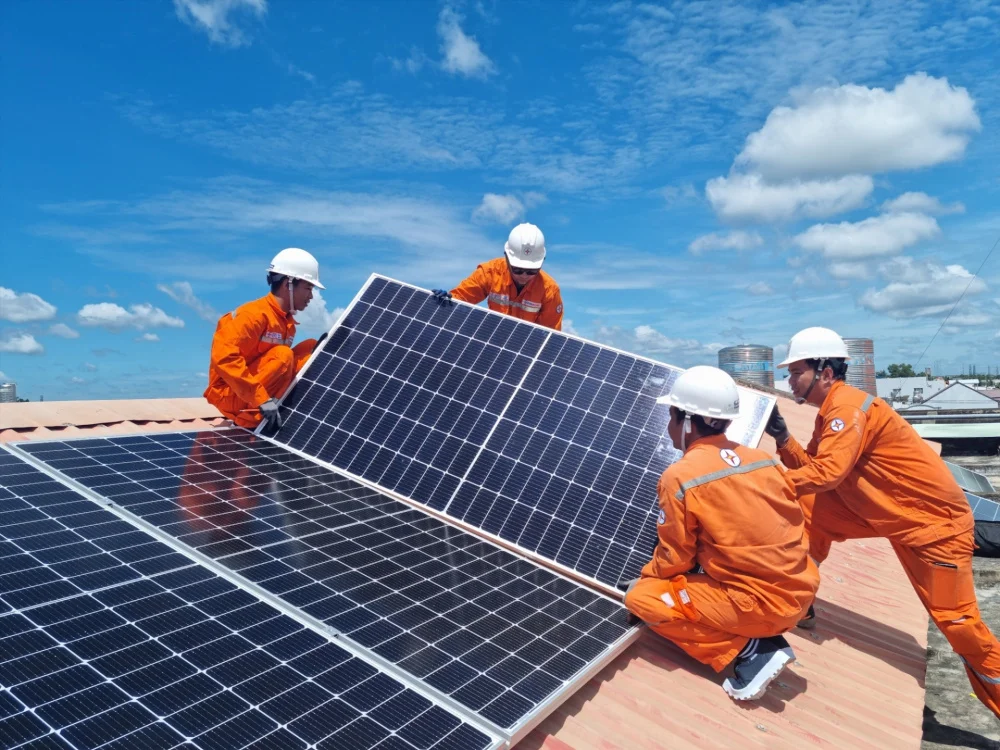
With rising electricity costs and growing pressure to meet sustainability targets, more factories and businesses are turning to solar as a practical solution.
Solar rooftop investment in Vietnam has fundamentally shifted.
Vietnam’s rooftop solar power system capacity has reached approximately 7,660 MWAC, accounting for over 9% of total national installed capacity and contributing nearly 4% of total system electricity output.
For most manufacturing businesses, understanding solar energy cost versus grid electricity has never been more urgent.
Choosing among top solar power companies is not just a procurement decision; it is a 20-year asset management commitment.
Not every solar panel is suitable for industrial facilities because each technology has different characteristics in terms of efficiency, durability, and long-term investment performance.
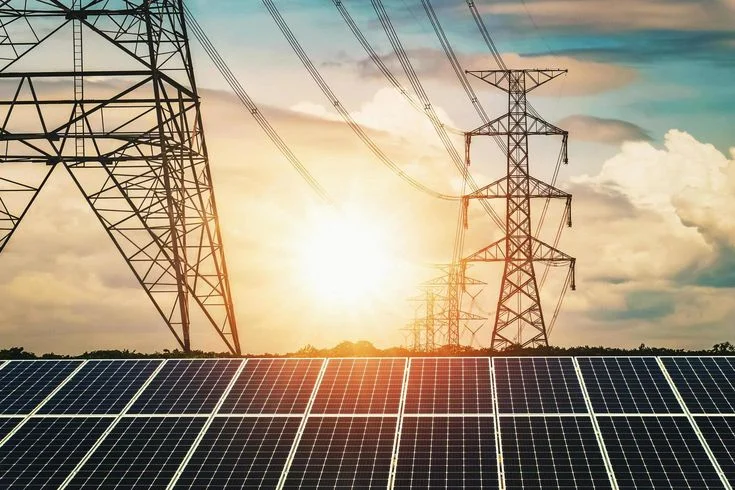
The Government’s official approval of revisions to Power Development Plan VIII marks a new phase in Vietnam’s energy transition.
Vietnam has significant potential to become a leading country in renewable energy development.
Vietnam renewable energy landscape is undergoing a fundamental transformation.
Rising electricity costs, tightening ESG requirements, and global pressure to meet RE100 and Net Zero targets are reshaping how manufacturers in Vietnam think about energy.
As energy costs become increasingly volatile and pressure to optimize production expenses grows, the decision around factory power installation is no longer just about “keeping the lights on.” Businesses today need to tr
In the special report ‘Evaluation of the Levelized Cost of Electricity (LCOE) for Renewable Energy and Proposed Alternative Criteria in the Context of Vietnam‘, experts from the Scientific Council of Vietnam Energy Magaz
In practice, more than 70% of operational issues can be traced back to the solar PV system design phase.
A solar investment is not just about installed capacity or projected energy yield.
A solar EPC contract is not just a construction agreement — it is a strategic investment decision that directly shapes asset performance over 20 to 25 years.
A poorly structured EPC contract does not just create legal headaches.
A solar power system is an operational asset with a lifespan of 20 to 25 years.
As operating costs rise and global green standards tighten, deploying industrial solar panels has moved beyond a trend.
Choosing the wrong solar panel installation companies is one of the most expensive mistakes a business owner can make.
Vietnam’s energy transition is anchored by three major policy pillars: Power Development Plan VIII (PDP8), the Direct Power Purchase Agreement (DPPA) mechanism, and the Just Energy Transition Partnership (JETP).
On 15 April 2025, the Prime Minister of Vietnam issued Decision 768/QD-TTg (“Decision 768”) approving the revision to the National Power Development Plan for the period 2021–2030, with a vision to 2050 (“Revised PDP8”).
On April 10, 2025, the Ministry of Industry and Trade (MOIT) issued Decision 988/QD-BCT (“Decision”), updating Vietnam’s feed-in tariff (FiT) rates for solar power projects.
Contact us to get a personalized consultation.