Revisions to Vietnam’s Power Development Plan VIII: Opportunities and Challenges for Businesses

The Government’s official approval of revisions to Power Development Plan VIII marks a new phase in Vietnam’s energy transition. As electricity demand continues to grow rapidly, energy security requirements become more critical, and sustainability targets gain greater importance, manufacturing businesses are expected to be among the groups most directly affected by these changes.
The revised power development plan for Vietnam is not only about national power infrastructure. It also directly impacts operating costs, energy strategies, and the long term competitiveness of businesses across multiple industries.
What Is Notable About the Revised Power Development Plan Vietnam VIII?
Government Officially Approves Revisions to Power Development Plan VIII
Under the approved revisions, Power Development Plan VIII has been updated to accommodate increasing electricity demand during the next development phase while ensuring national energy security amid rising power consumption.
One of the most significant directions in the revised power development plan Vietnam is the substantial increase in renewable energy capacity within the national power generation mix. This reflects a gradual shift away from conventional power sources while promoting cleaner, more flexible, and more sustainable energy models.
In addition to ensuring sufficient electricity supply for economic growth, the revised power development plan Vietnam also emphasizes system feasibility, particularly the balance between generation capacity, transmission infrastructure, and actual electricity demand.

Electricity Will Remain a Major Challenge for Manufacturers
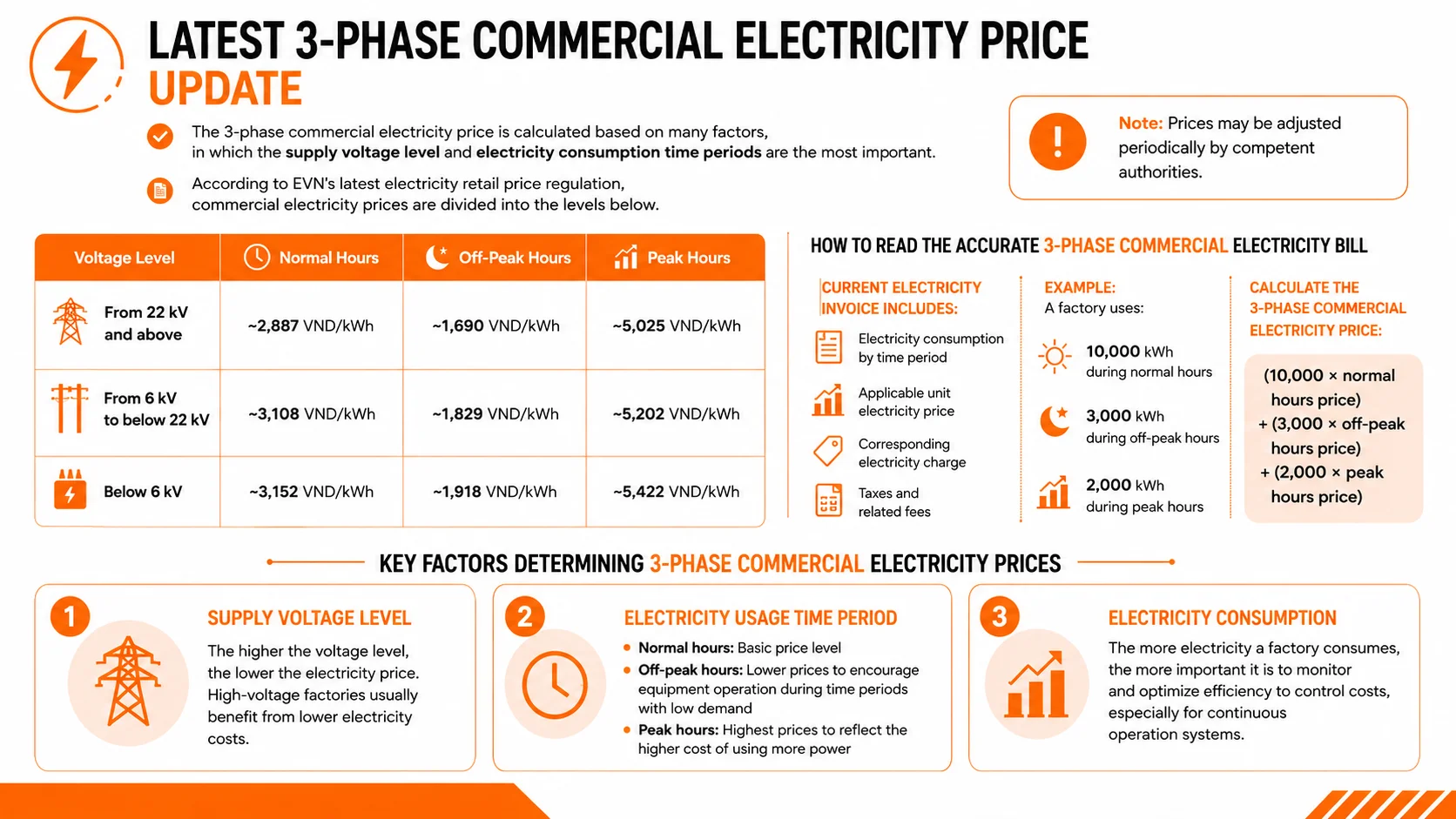
Industrial electricity demand is expected to continue increasing alongside manufacturing expansion and industrial investment. As a result, electricity costs are likely to become an even greater burden for businesses.
Companies will not only face electricity price fluctuations but may also experience higher peak-hour electricity costs and potential supply constraints during periods of high demand.
Therefore, the revised power development plan Vietnam is not simply a national energy planning framework. It will directly influence business operations and energy management strategies. Manufacturers will need to become more proactive in managing energy consumption rather than relying entirely on the national grid.
Read the full decision on the revised Power Development Plan VIII.
The Biggest Change in Power Development Plan VietNam VIII
Solar Power Continues to Be Prioritized
One of the most notable aspects of the revised power development plan Vietnam is its strong commitment to expanding renewable energy, particularly solar power.
Solar energy systems continue to be viewed as an important solution for reducing pressure on the national power system while meeting growing electricity demand. In particular, self-generation and self-consumption solar models are expected to receive stronger support within the industrial sector.
This direction creates significant opportunities for factories seeking to:
- Reduce dependence on the grid
- Control long-term operating expenses (OPEX)
- Strengthen energy resilience and flexibility
In addition, rooftop solar systems can help businesses meet ESG requirements and emission reduction targets across global supply chains.
The Growing Role of Battery Energy Storage Systems (BESS)
Alongside solar power, Battery Energy Storage Systems (BESS) are becoming a critical component of Vietnam’s energy transition.
BESS solutions do more than store excess electricity. They also help businesses:
- Reduce peak demand charges through peak shaving
- Improve power stability
- Increase system availability
- Enhance operational reliability
When integrated with solar power in a hybrid energy system, BESS provides greater flexibility in electricity usage and helps reduce production downtime risks.
The revised power development plan Vietnam highlights the growing importance of energy storage in supporting renewable energy integration and grid stability.
How Does Power Development Plan VIII Affect Manufacturing Businesses?
Electricity Costs Will Continue to Rise as a Business Concern
For manufacturers, electricity remains one of the largest operating expenses. As national electricity demand continues to increase, pressure from electricity pricing and peak hour charges is expected to become more significant.
In this environment, relying solely on grid electricity makes long-term cost control increasingly difficult. This is one reason why many factories are exploring more flexible energy solutions to improve efficiency and reduce operating expenses.
The revised power development plan Vietnam reinforces the need for businesses to evaluate alternative energy strategies that support cost optimization.
Businesses Must Take a More Proactive Energy Strategy
The revised power development plan Vietnam reflects a broader transition from traditional grid dependence toward proactive energy management.
Industrial businesses should consider:
- Developing self-generation and self-consumption strategies
- Improving energy efficiency
- Integrating solar power with energy storage solutions
- Monitoring long-term operational performance
As a result, energy investments are no longer purely technical decisions. They have become an essential part of asset management and business strategy.
Electric Bird’s Perspective
What Opportunities Does Power Development Plan VIII Create for Industrial Businesses?
The revised power development plan Vietnam introduces both challenges and opportunities.
While electricity costs may continue to increase, businesses now have greater opportunities to strengthen their long-term energy strategies.
The continued growth of renewable energy and rooftop solar allows manufacturers to reduce dependence on the grid, improve energy flexibility, and optimize operating costs.
At the same time, adopting clean energy solutions can enhance competitiveness, support ESG compliance, and contribute to more sustainable business operations.
How Can Electric Bird Support Businesses?
As a professional solar company, Electric Bird focuses not only on solar installation but also on maximizing energy asset performance throughout the entire lifecycle of a project.
Our services include:
- Analyzing actual load profiles
- Implementing rooftop solar systems for factories
- Developing solar energy operation strategies
- Applying SCADA systems for monitoring, analytics, and solar maintenance management
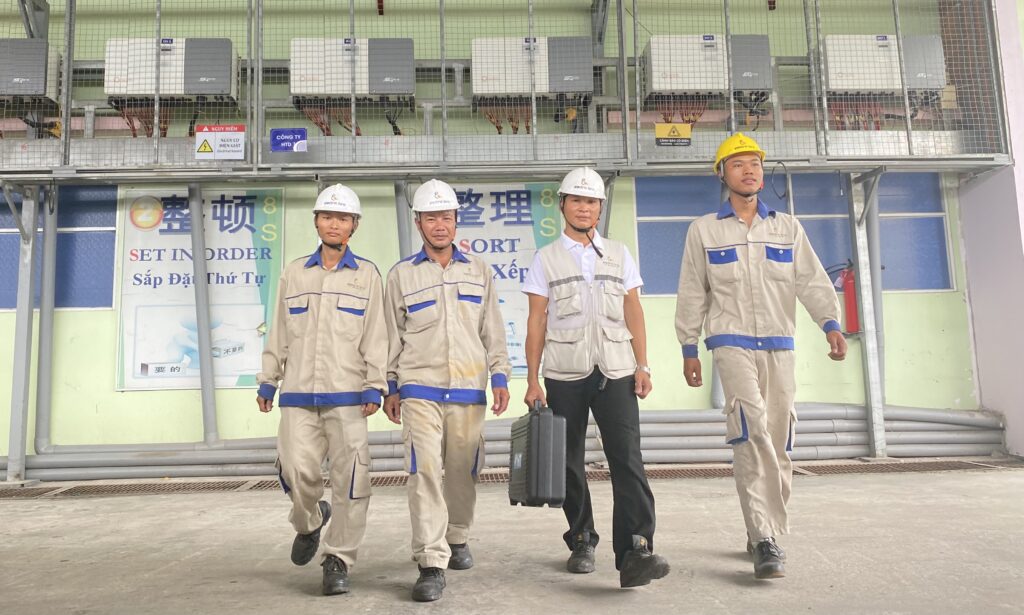
Through these solutions, Electric Bird helps businesses optimize OPEX, improve energy system reliability, and maximize long term performance.
Contact our experts today for professional consultation.
FAQs about Power Development Plan Vietnam VIII
How does Power Development Plan VIII affect businesses?
Power Development Plan VIII is expected to increase long-term pressure on electricity costs, particularly for manufacturers with high power consumption. Businesses should adopt more proactive energy strategies rather than relying entirely on the grid.
Why are businesses investing in rooftop solar?
Rooftop solar helps reduce OPEX, improves energy independence, and supports ESG goals and clean energy commitments.
Is Solar O&M important after installation?
Yes. Solar O&M helps maintain system performance, monitor performance ratio (PR), improve availability, and identify underperformance issues early.