1528+
MWp Capacity435+
Projects1528+
MWp Capacity435+
Projects1528+
MWp Capacity435+
Projects1528+
MWp Capacity435+
Projects
1528+
MWp Capacity435+
Projects1528+
MWp Capacity435+
Projects1528+
MWp Capacity435+
Projects1528+
MWp Capacity435+
Projects
Not every solar panel is suitable for industrial facilities because each technology has different characteristics in terms of efficiency, durability, and long-term investment performance.
Understanding the different types of solar panels helps businesses evaluate suitable technologies, optimize electricity generation, improve LCOE, and achieve faster investment payback.
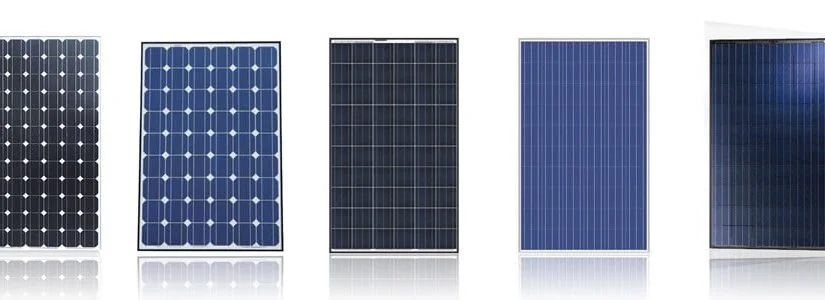
Solar panels can be classified based on different criteria, including solar cell technology, structural design, and module power capacity. Each category represents different performance characteristics and investment advantages.
| Solar Panel Technology | Characteristics | Advantages | Disadvantages |
|---|---|---|---|
| Mono PERC | A popular technology improved from traditional monocrystalline technology | Competitive cost, stable efficiency (~21 to 22%) | LID degradation, lower efficiency compared with newer technologies |
| TOPCon | An upgraded version of PERC with better passivation layers | High efficiency (~22 to 23%), lower degradation | Higher cost than Mono PERC |
| HJT | Combines crystalline silicon and amorphous silicon technology | Very high efficiency (~23 to 24%), lower temperature coefficient | Higher cost, requires compatible inverter systems |
| Back Contact (IBC, xBC) | Solar cells without front busbars | Highest efficiency, better aesthetics | Very high cost, less common in C&I projects |
Among current types of solar panels, monocrystalline-based technologies remain widely applied in industrial solar projects because of their balance between efficiency, reliability, and cost.
A monocrystalline solar panel is commonly selected for projects requiring high efficiency within limited installation areas. Advanced technologies such as TOPCon and HJT continue improving energy output and reducing long-term degradation.
When comparing different types of solar panels, structural design plays an important role in determining durability and actual operating performance.
| Solar Panel Structure | Characteristics | Advantages | Disadvantages |
| Monofacial | Absorbs sunlight from one side | Lower cost, easy deployment | Lower efficiency compared with bifacial solar panels |
| Bifacial | Absorbs sunlight from both sides | Increases energy output by 5 to 20% | Depends on installation conditions |
| Glass-Backsheet | Polymer backsheet design | Lightweight, lower cost | Lower durability compared with glass-glass structure |
| Glass-Glass | Two-layer glass structure | High durability, strong PID resistance | Heavier weight, higher cost |
| Module Type | Power Capacity | Advantages | Disadvantages |
| Standard Module | 400 to 500W | Moderate size and weight, easy transportation and manual installation. Suitable for systems with complex rooftop layouts or limited load capacity. | More panels are required for the same total capacity, increasing costs for mounting structures, cables, and installation labor. |
| High-Power Module | 550 to 700W+ | Optimizes BOS costs by reducing the number of clamps, aluminum rails, and DC cables. Increases energy density on land or rooftop areas, improving financial performance (IRR) for large-scale projects. | Very large module dimensions (often over 2.3m) and heavy weight require specialized lifting equipment and skilled technicians to avoid micro-cracks. |
When businesses consider investing in solar power systems, the challenge is not simply choosing the most advanced types of solar panels, but selecting the most suitable solution based on actual operating conditions and the factory’s financial objectives.
A wrong decision during the equipment selection stage can affect project performance throughout 20 to 30 years of operation. Therefore, businesses need to evaluate technical, financial, and operational factors before selecting the appropriate solar panel technology.
Efficiency is one of the most important factors when evaluating different types of solar panels because it directly affects the electricity output generated by the solar system.
Conclusion: For factories aiming to maximize energy generation within existing installation areas, businesses should prioritize the actual performance of types of solar panels rather than only focusing on rated specifications.
For an asset with a lifespan of 25 to 30 years, the durability of solar panels directly determines the long-term stability of project cash flow. Important factors to consider include:
Conclusion: For industrial solar projects, selecting types of solar panels with high durability helps maintain stable operation and reduces risks related to production interruptions caused by system failures.
When selecting types of solar panels for industrial facilities, businesses should view them as long-term energy assets rather than simply purchasing equipment.
The effectiveness of a solar investment should be evaluated based on technical performance combined with financial indicators, including:
Conclusion: The optimal types of solar panels are not necessarily the cheapest options. Businesses should prioritize solutions that provide stable electricity generation and lower total costs throughout the system lifecycle.
IEC Standards (Mandatory Technical Certifications)
These certifications provide a foundation for evaluating the quality and durability of solar panels under actual operating conditions:
These certifications help ensure that selected types of solar panels not only achieve initial performance levels but also maintain stable operation under actual factory conditions.
A reputable manufacturer with Tier 1 classification and strong financial capability helps projects access financing more easily and reduces long-term investment risks.
Clear and transparent warranty policies help factories control financial risks throughout the system lifecycle.
Conclusion: Choosing types of solar panels that meet technical standards and come from reliable manufacturers is a key foundation for long-term investment efficiency. In addition, working with experienced EPC contractors helps businesses ensure proper equipment evaluation and reduce operational risks.
In many solar projects, operational issues often originate from unsuitable equipment selection at the beginning. Factories can reduce risks by identifying common mistakes early:
Avoiding these mistakes not only helps maintain stable system operation but also directly impacts electricity output and investment efficiency throughout the project lifecycle.
After identifying the required criteria, the next step is applying them to actual operating conditions. Each factory model has different technical and financial priorities.
For factories installing solar systems on rooftops, the main challenges involve limited space and structural load capacity. Therefore, selecting the right types of solar panels should focus on efficiency and suitability for rooftop conditions.
Overall, for rooftop factories, the core objective is maximizing electricity output per square meter while controlling investment costs and structural requirements.
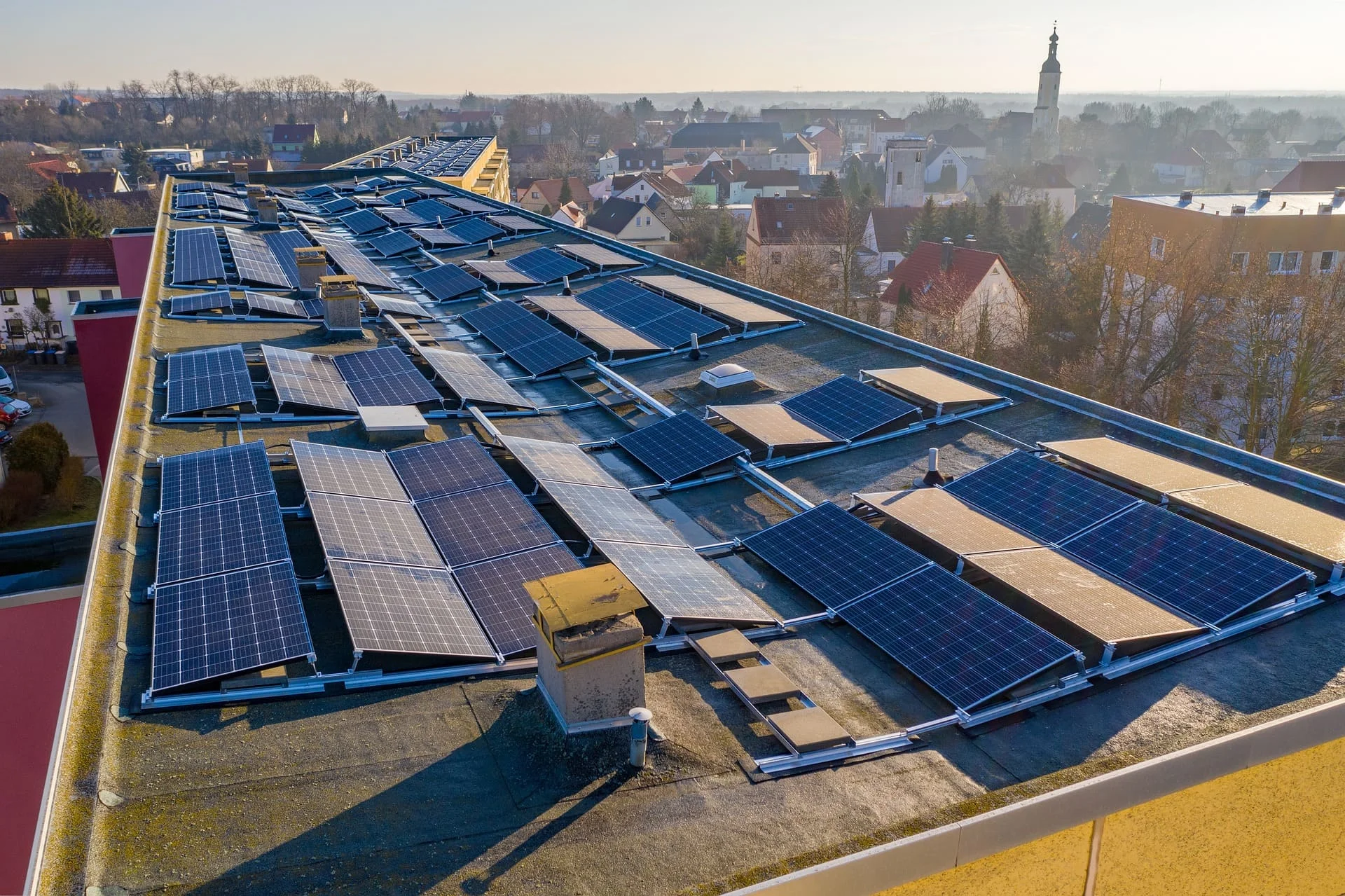
For factories operating in high temperatures, high humidity, or corrosive environments, the durability of solar panels becomes a key factor determining operational efficiency.
In harsh environments, durability and reliability should be prioritized equally with efficiency to ensure long-term operation.
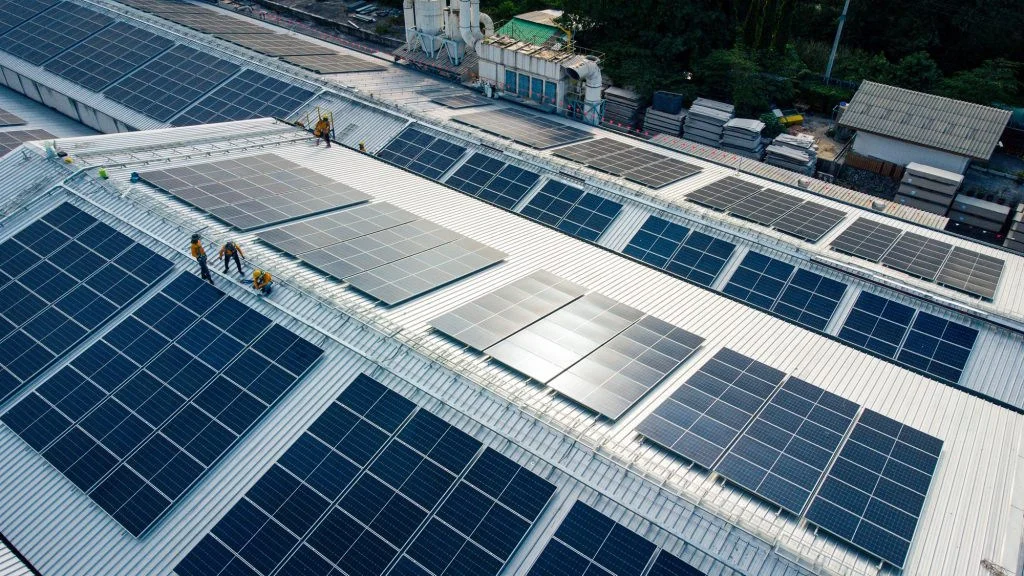
For businesses focusing on financial optimization, module selection should prioritize lifecycle value instead of only considering initial investment costs.
In summary, for factories with long-term investment goals, optimizing lifecycle costs and maintaining stable energy output provide more sustainable financial value compared with simply reducing upfront costs.
Electric Bird is a reputable solar EPC contractor with experience in implementing and operating solar power systems for various projects domestically and internationally, especially large-scale C&I projects.
Electric Bird’s engineering team participates throughout the entire process, from site surveys, technical design, and equipment selection to installation and system optimization based on actual operating data.
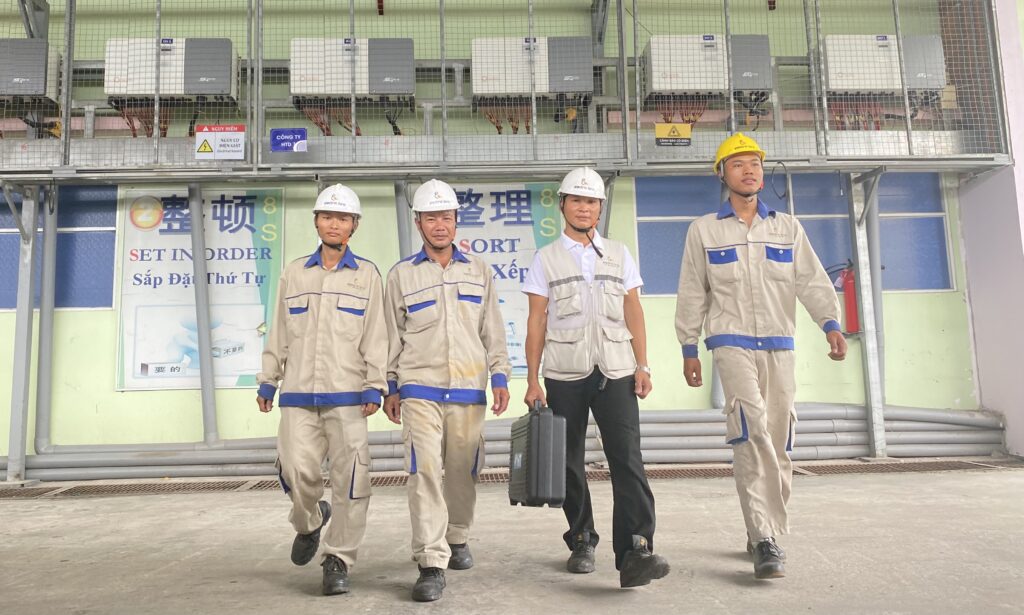
In addition, specialized Solar O&M capabilities help businesses maintain stable system performance, control risks, and optimize costs throughout the project lifecycle.
Contact Electric Bird today for a suitable solar solution for your factory model and maximize your solar investment efficiency.
The selection depends on investment objectives and operating conditions. TOPCon provides a balance between efficiency and cost, HJT is suitable when higher efficiency and lower degradation are required, while Mono PERC is suitable for projects prioritizing CAPEX optimization.
Yes. High-power modules are especially suitable for projects that need to optimize installation areas and reduce BOS costs. However, compatibility with inverters and electrical systems should be evaluated to avoid additional costs.
Solar panels typically have a lifespan of 25 to 30 years, depending on module quality, environmental conditions, and operation methods.
Businesses should evaluate based on indicators such as LCOE, IRR, and expected electricity output instead of focusing only on initial investment costs.
Not recommended if lower costs negatively affect efficiency and durability. The optimal choice is a solar panel that reduces electricity costs in the long term, not simply the one with the lowest initial price.
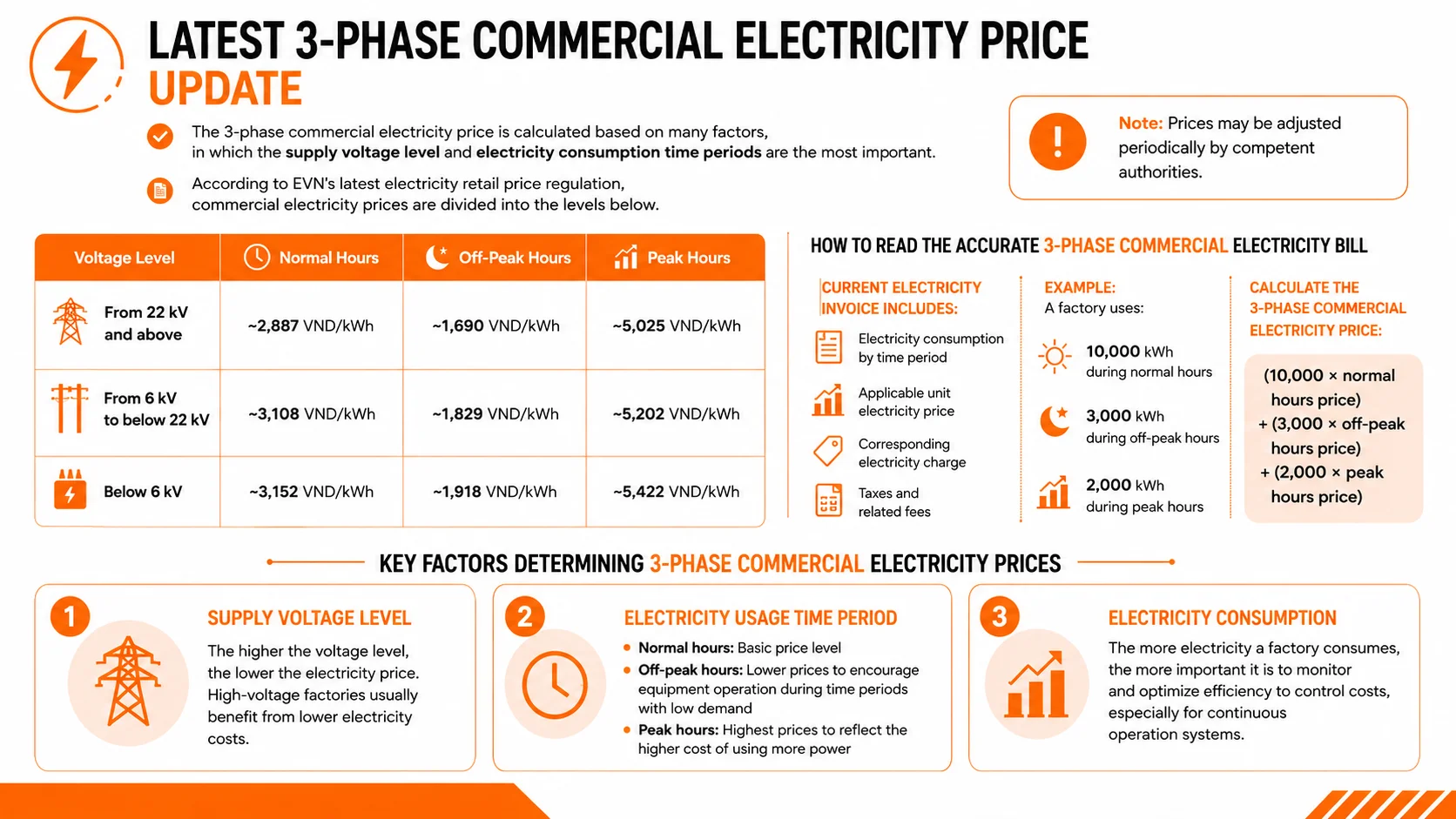

The 3-phase commercial electricity tariff in Vietnam is structured around voltage level and time-of-use billing, which means your monthly electricity bill is not fixed. It shifts based on when and how much power your facility draws. Understanding this structure is the first step toward meaningful cost control. What Is Commercial Electricity? Key Sectors That Use […]

For industrial facilities in Vietnam, electricity is one of the largest recurring operational expenses, especially for production lines running around the clock. Understanding how the Vietnam industrial electricity tariff is structured allows factory managers and asset owners to control costs, optimize production scheduling, and make informed decisions about energy investments. The short answer: your monthly […]
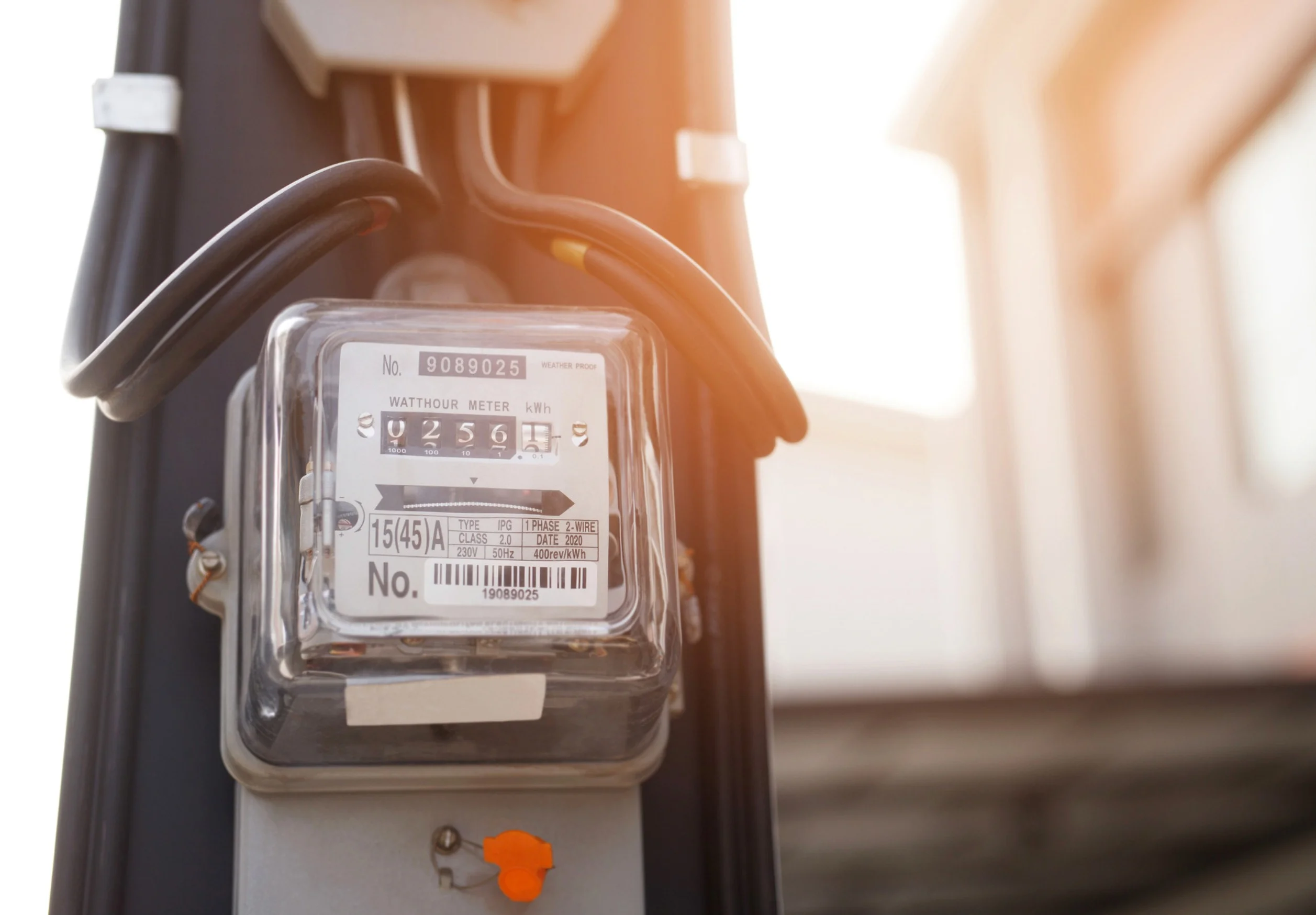
Understanding peak electrical hours is a practical advantage for any facility manager or business owner. Knowing exactly when demand spikes allows operations teams to reschedule high-draw equipment, reduce strain on the grid, and meaningfully cut monthly energy costs over the long term. What Are Peak Electrical Hours and When Do They Occur? Peak electrical hours […]