EPC Contract Risk Management: What Every Solar Owner Must Know

A poorly structured EPC contract does not just create legal headaches. It quietly erodes your project’s IRR over a 20 to 25-year asset lifespan through rising OPEX, undetected performance losses, and unresolved O&M disputes. This guide breaks down the critical technical and commercial clauses every asset owner must demand before signing.
Why an EPC Contract Is More Than a Construction Agreement
Most asset owners evaluate an EPC contract through the lens of CAPEX, comparing price-per-watt across vendors and focusing on completion timelines. That approach misses the more consequential risk. In solar energy, the real financial exposure lies not in what you pay upfront, but in how performance obligations are defined, measured, and enforced throughout the project’s operating life.
An EPC contract, in its truest function, is a risk allocation instrument. Under the turnkey model, the contractor absorbs design risk, material cost escalation, and schedule delays. However, this risk transfer is only effective when the contract contains quantifiable performance standards. Without them, the system may operate safely at the electrical level while consistently underperforming against its design baseline. The asset owner bears the financial consequence silently, through cumulative energy yield losses that never trigger a formal contractual dispute.
This is the structural problem at the heart of most underperforming solar assets: the EPC construction phase ends without establishing the measurement framework needed to protect asset performance over time.

Key Technical and Commercial Clauses in a Solar EPC Contract
Performance Ratio and Baseline Commitments
The EPC contract must replace vague language like “guaranteed high output” with a minimum committed Performance Ratio (PR), calculated against a defined design baseline and actual irradiation data. The formula must reference a recognized standard such as IEC 61724, and the contract must include a weather-normalization mechanism so that irradiation-driven yield shortfalls can be separated from technical underperformance.
This distinction matters enormously in practice. Without a weather-normalized PR baseline, contractors can attribute any yield gap to unfavorable weather, leaving the asset owner with no contractual recourse against genuine system degradation.
Degradation Rate Thresholds
Panel degradation is a natural phenomenon, but contracts must define the acceptable limits to create enforceable warranty triggers. Standard benchmarks include:
- First-year degradation: below 2% to 2.5%
- Subsequent annual degradation: below 0.5% to 0.55% per year
When degradation exceeds these thresholds, the contract must specify whether the EPC contractor is obligated to provide financial compensation or to physically supplement capacity through additional modules or inverters at their own cost. Leaving this undefined at the EPC construction stage means absorbing abnormal degradation losses with no recovery path.
Mismatch Loss Mitigation in String Design
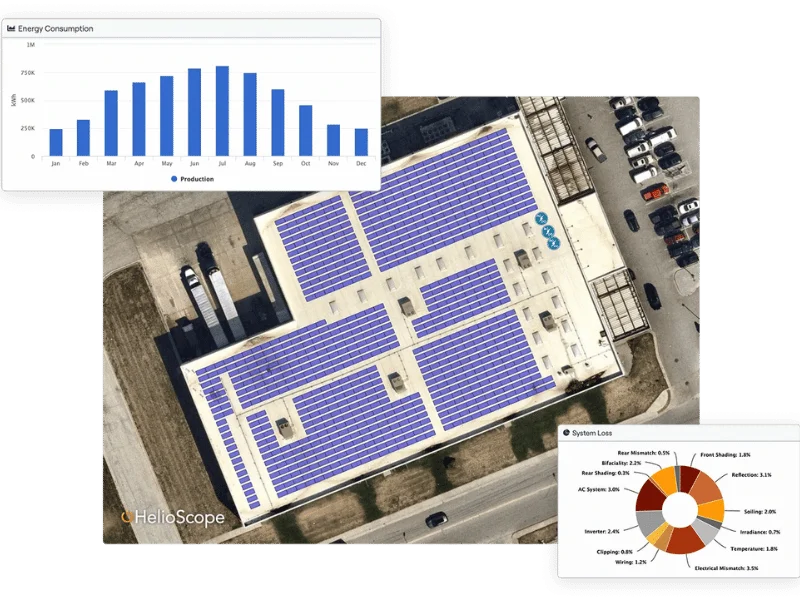
String-level mismatch is one of the most underappreciated sources of yield loss in EPC farm projects. Even small mismatches in string configuration, if unaddressed at the design stage, accumulate into material energy losses over time. Asset owners should require the EPC contractor to submit detailed simulation outputs from PVSyst or Helioscope, demonstrating that string design has been optimized for minimum mismatch. This simulation package should be contractually required as a deliverable before procurement begins, not after.
Commercial and Legal Clauses That Protect Your IRR
Scope of Work and Interconnection Boundaries
The contract must define the Battery/Grid Limits precisely, including which party is responsible for transformer upgrades, interconnection permit applications, and any structural reinforcement to rooftop load-bearing elements. Ambiguity in these boundaries generates cost disputes during the EPC construction phase and handover gaps that compromise O&M accountability afterward.
Liquidated Damages for Schedule Delays
The preferred legal framing is Liquidated Damages (LDs), not penalties. LDs must be calculated based on projected revenue loss during the delay period, with a clear cap typically set between 5% and 10% of total contract value. This structure gives the clause legal enforceability while preserving commercial negotiability.
Performance LDs at Commissioning
If measured PR at commissioning falls below the committed baseline, the contract must specify the remedy clearly. The two standard options are:
- Financial compensation equivalent to the projected lifetime yield shortfall
- Physical capacity addition (modules or inverters) at the contractor’s expense
Without either of these mechanisms embedded in the EPC contract, the commissioning stage becomes a ceiling rather than a floor for performance expectations.
Handover Standards: The Link Between EPC and O&M
The transition from EPC construction to operations is one of the highest-risk moments in a solar asset’s lifecycle. Data gaps or incomplete documentation at this stage reduce the owner’s ability to verify performance and enforce SLA obligations in subsequent years.
Weak handover practices typically look like this: the system is commissioned based on inverter status and a basic system check. What a robust handover looks like in practice is significantly different:
- PAC and FAC criteria based on quantitative test checklists, including I-V curve measurements and thermal imaging to identify localized hotspots
- Full SCADA and monitoring system handover with verified data continuity
- As-built drawings and a structured fault escalation matrix
- Documented PR baseline figures validated against the original PVSyst simulation
Without this continuity, the O&M team inherits a system with no verified performance reference, which forces a reactive maintenance model from day one.
The Cost of Getting the EPC Contract Wrong
Rising Long-Term OPEX
Loose physical design and missing measurement standards push O&M into a reactive maintenance model. The “fix when it breaks” approach increases incident response costs, extends downtime, and accelerates performance degradation over the asset’s operational cycle. EPC farm projects that skip rigorous commissioning benchmarks consistently show higher O&M spend within the first five years.
Hidden Yield Losses
The most financially damaging outcome of a poorly structured EPC contract is not a system failure. It is a system that runs without errors, but consistently underperforms its design baseline. No alerts fire on the inverter dashboard. No contractual triggers activate. The asset owner simply loses revenue, compounded annually, with no contractual basis for recovery.
How Electric Bird Approaches EPC Contract Risk
At Electric Bird, we approach every solar project from the perspective of an energy asset manager, not just a construction contractor. Our EPC contract framework is built around three principles:
- Quantified performance commitments: PR baselines, degradation thresholds, and availability targets are all defined as measurable KPIs, not qualitative statements.
- Design rigor: Every system is simulated through PVSyst with validated string optimization before procurement. SCADA systems are configured to track PR, availability, and downtime with the granularity required for lifecycle asset management.
- Rigorous handover: Every commissioning milestone is validated with specialized measurement equipment, including I-V curve analyzers and thermal drone inspection, to ensure there are no performance gaps entering the O&M phase.

The goal is not simply a system that powers on. It is a solar asset that performs within its committed parameters across its full 20 to 25-year lifecycle while protecting the project’s IRR against cumulative degradation risk.
If you are structuring a new solar investment or reviewing an existing EPC contract, contact Electric Bird for a technical consultation on baseline design and contract framework standards.
FAQ: EPC Contract Risk Management in Solar Projects
What is the difference between an EPC contract and a standard construction agreement for solar?
A standard construction agreement covers physical delivery only. An EPC contract is a full risk allocation instrument covering design, performance obligations, and schedule accountability in a single turnkey engagement.
How should Performance Ratio (PR) be defined in an EPC contract?
Reference IEC 61724 as the calculation standard, set a minimum PR against a validated design baseline, and include a weather-normalization clause. Without normalization, contractors can attribute any yield shortfall to irradiation rather than system underperformance.
What happens if degradation rate thresholds are not defined in the EPC contract?
Abnormal degradation will not trigger any warranty obligation. The contractor can claim it falls within natural operating parameters, and the asset owner has no legal basis to demand remediation or compensation.
What is a PAC and FAC, and why do they matter?
PAC (Provisional Acceptance Certificate) and FAC (Final Acceptance Certificate) are commissioning milestones. When properly structured, they require I-V curve measurements and thermal imaging, not just a visual check. Skipping these creates traceability gaps that weaken O&M accountability for years afterward.
How does a weak EPC contract increase long-term OPEX?
Missing performance baselines at the EPC construction stage force O&M into reactive maintenance. Faults are caught late, downtime increases, and response costs compound annually across the asset’s 20 to 25-year operating cycle.ShareProject contentElectric BirdCreated by youAdd PDFs, documents, or other text to reference in this project.