6 Steps to Install Industrial Solar Panels and Maximize ROI
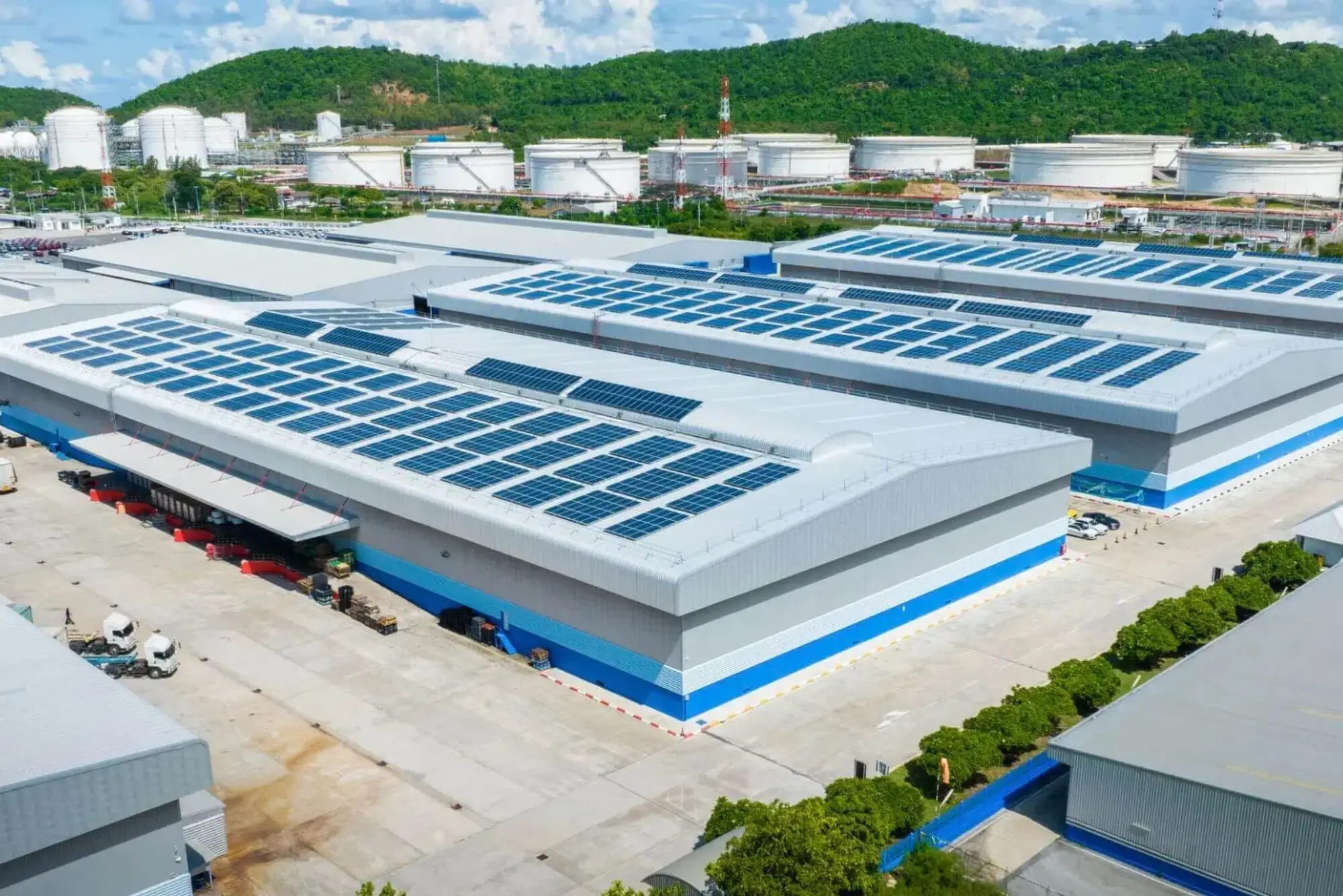
As operating costs rise and global green standards tighten, deploying industrial solar panels has moved beyond a trend. For asset-owning businesses, it is a long-term energy asset management strategy. Yet achieving design-level performance and maintaining system availability over a 20 to 25-year lifespan requires a precise deployment process, from initial engineering design through to a structured operations and maintenance (O&M) strategy.
This article offers a technical deep-dive into the standard installation process for industrial solar panels, with a focus on protecting your IRR and eliminating cumulative performance degradation.
Why More Factories Are Investing in Industrial Solar Panels
The decision to invest in renewable energy at an industrial scale is typically driven by three core business imperatives:
- Reduced energy expenditure (OPEX) and long-term price stability: Minimizing exposure to grid tariff volatility while cutting energy costs during peak demand windows, which carry the highest economic value.
- ESG compliance and supply chain requirements: Manufacturers participating in global value chains face increasing pressure to reduce carbon emissions and obtain green certifications to satisfy international partner requirements.
- Greater energy independence and operational efficiency: Establishing a stable supplementary power source to maintain energy asset performance independently from the grid.

The 6-Phase Standard Installation Process for Factory Solar Systems
To ensure the system of industrial solar panels operates without critical failures and avoids performance degradation below the Year 1 baseline, deployment must follow six clearly defined phases.
Phase 1: Site Survey and Baseline Data Collection
A site survey is far more than measuring the rooftop area. It is the foundational data-collection step that establishes the baseline for the entire project. For factory-scale deployments, the survey must cover the following:
- Structural and architectural assessment: Evaluating the load-bearing capacity (static and live loads) of the roofing framework, along with the condition of existing metal sheet or concrete roofing.
- Shading analysis: Mapping obstructions such as chimneys, water tanks, and surrounding vegetation using specialized equipment or drone inspection to prevent localized hotspot formation, which causes long-term cell degradation.
- Electrical infrastructure assessment: Measuring transformer capacity, identifying connection panel locations, routing cable pathways, and collecting the load profile to calculate self-consumption ratios.
This phase requires close collaboration between the EPC contractor’s structural and solar design engineers and the factory’s technical director and M&E maintenance team. For mid to large-scale projects (1 MWp and above), on-site survey work typically takes one to three days, followed by three to five days of 3D simulation modeling and Site Survey Report generation.
Phase 2: System Design – The Technical Foundation of Long-Term O&M Performance
A design document is not simply a construction blueprint. It must be engineered upfront to eliminate downstream operational risks. A poorly executed design introduces mismatch losses from unbalanced string configurations or inverter derating due to thermal overload.
Key engineering deliverables include:
- String sizing calculations: Developing the panel-to-inverter wiring diagram to optimize operating voltage and minimize losses under partial shading conditions.
- Equipment configuration selection: Specifying the PV module model, inverter type, and DC/AC panel designs suited to the factory environment, including appropriate ingress protection ratings such as IP65 or IP66 for dust and moisture exposure.
- Structural and safety engineering: Designing the mounting system, calculating wind load tolerances, and specifying the earthing and surge protection systems to safeguard physical assets.
- Energy yield simulation: Running software modeling (such as PVsyst) to produce a projected energy yield report and Performance Ratio (PR) baseline, which forms the contractual performance commitment.
This phase takes approximately one to two weeks, depending on project scale and the speed of owner approval. Both the EPC project manager and the factory’s technical leadership must sign off on final construction drawings.
Phase 3: Construction and Installation – Physical Risk Control
This is the most resource-intensive phase and the stage most susceptible to latent technical defects. In high-humidity factory environments, poor workmanship significantly increases the risk of insulation degradation, leading to ground faults and recurring system shutdowns.
Key construction activities include:
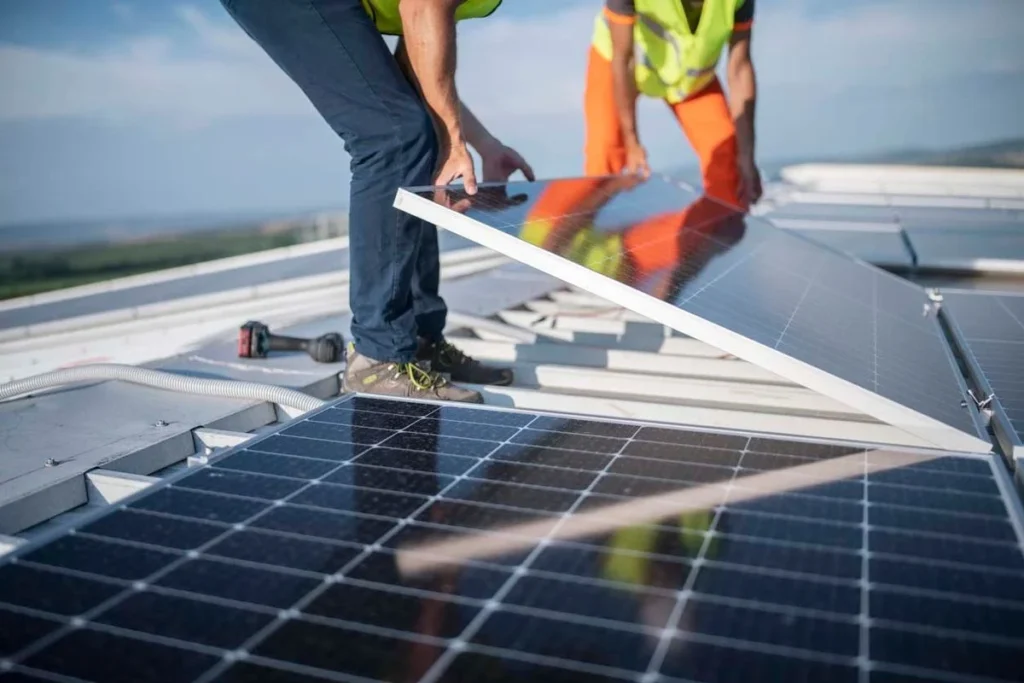
- Material staging and structural reinforcement: Safely hoisting panels, inverters, and cabling to the installation area. Reinforcing the roof structure where required and installing the mounting system.
- Equipment installation: Fixing panels into position and mounting inverters in well-ventilated locations away from direct sun exposure.
- Wiring and cabling: Routing DC and AC cables through industrial-grade cable trays. Critically, MC4 connector crimping must be performed with dedicated tooling to eliminate heat generation and arc flash risks.
For a 1 MWp project, construction typically spans four to eight weeks, subject to weather conditions and the factory’s permitted working hours. The site manager, HSE safety supervisor, and the factory’s own safety and security teams must coordinate to avoid disrupting production operations.
Phase 4: SCADA Integration – The Data Governance Backbone
Confirming that an inverter’s status light is green is entirely insufficient for performance assurance. To prevent silent performance degradation, a SCADA system must be established rigorously to collect data, analyze trends, and enable continuous optimization of the industrial solar panels’ performance.
Key integration tasks include:
- Weather station installation: Deploying irradiance sensors (pyranometers), ambient temperature sensors, and module surface temperature sensors.
- Communication network setup: Running RS485 or LAN signal cables to connect inverters and smart meters to the central data logger.
- Dashboard programming: Configuring the monitoring interface to display real-time operational parameters and setting up automated alert logic to flag performance deviations as they occur.
SCADA integration typically takes three to five days and is conducted in parallel with the final electrical connection phase. The contractor’s automation engineer and network specialist must coordinate with the factory’s IT manager to secure appropriate internal network and internet access permissions.
Phase 5: Operations, Monitoring, and Maintenance (O&M)
Reactive maintenance (fixing issues after they occur) is not a viable strategy for industrial solar panels. Factory solar systems require a condition-based maintenance approach to keep downtime within acceptable limits.
Core O&M activities include:
- Daily data monitoring: The engineering team tracks PR and availability metrics through the SCADA platform to detect strings operating below design thresholds before failures escalate.
- Preventive maintenance: Infrared drone thermography to identify hotspots, periodic torque checks on structural fasteners, and scheduled insulation resistance testing.
- Panel cleaning: Cleaning schedules are determined by an economic soiling loss threshold analysis rather than a fixed calendar. The panel surface is cleaned only when dust-induced yield loss exceeds the cost of the cleaning operation.
This phase spans the full 20 to 25-year industrial solar panels lifecycle. Scheduled field inspections by the O&M provider’s technical team typically occur every three to six months, supported by continuous remote monitoring from the operations center.
Phase 6: Commissioning, Energization, and System Handover
This final phase of industrial solar panel installation confirms that the system performs in accordance with the design specification and establishes the production baseline for all future performance benchmarking.
Key commissioning activities include:
- Performance testing: Measuring output parameters, including I-V curves, operating voltage, and current. Testing protective relay systems and validating zero-export functionality where required.
- Commercial energization: Connecting the system to the factory’s transformer and initiating grid-synchronized operation.
- Training and documentation handover: Training the factory’s technical team on SCADA data interpretation and emergency isolation procedures. Delivering the full As-Built documentation package, warranty records, and SLA appendix.
The commissioning and handover process requires one to two weeks to complete technical verification testing, finalize acceptance documentation, and execute formal handover agreements. For projects with grid connection agreements, EVN’s representative is included in the acceptance committee.
Key Factors to Evaluate Before Installing Solar Panels for Commercial Buildings
Capital investment and IRR analysis: Unmanaged performance degradation directly erodes IRR and increases the system’s Levelized Cost of Energy (LCOE). A balanced evaluation of CAPEX against projected OPEX is essential before committing to a design.
Roof condition and building infrastructure: The remaining service life of the existing roof must be aligned with the 20 to 25-year solar system lifecycle. Installing solar panels on a roof that requires waterproofing work within five years creates avoidable asset management risk.
Factory load profile and consumption pattern: Detailed load profile analysis is required to size the system capacity in line with actual self-consumption, optimizing the investment’s cash flow profile.
Long-term O&M strategy and performance management: OPEX tends to escalate sharply without a structured O&M plan. Asset owners must define a clear annual maintenance budget to keep PR, availability, and downtime metrics within agreed control thresholds.
Regulatory compliance and grid connection requirements: The system interconnection must comply with local utility regulations (EVN), zero-export device requirements where applicable, and fire safety standards.
How to Select the Right EPC Partner for Industrial Solar Panels
Not every solar company or EPC contractor has the capability to protect energy asset performance after energization. Asset owners should evaluate potential partners across four dimensions:
- EPC capability and project track record: The partner must demonstrate experience through completed projects of comparable scale, with strong construction risk management and strict adherence to safety standards.
- Design, SCADA, and O&M competency: A credible contractor goes beyond hardware installation. They must own the monitoring technology and apply data trend analysis across the string and seasonal cycles to identify root causes of performance issues.
- Evaluation criteria before contract signing: Require the contractor to define quantified operational KPIs within the SLA appendix. Risk allocation for operational responsibility must be clearly structured in the contract, not expressed through vague commitments such as “good performance.”
- Commitment to long-term performance optimization: Response Time and Resolution Time for fault rectification must be contractually defined and tiered by impact severity. Brief but recurring downtime events can generate significant cumulative yield losses over seasonal cycles.
About Electric Bird: Industrial Solar Panels Specialist
As a leading renewable energy specialist in Vietnam, Electric Bird delivers end-to-end solutions for commercial and industrial solar panel installation, engineered to protect the financial performance of energy assets throughout their full operating life.
- B2B project delivery capability: Electric Bird’s experienced engineering teams plan and execute projects aligned to factory load profiles, ensuring structural safety compliance and fire protection standards are met without exception.
- Integrated design, SCADA, and O&M: SCADA infrastructure is established from the project’s outset. Our approach goes beyond alert response. We apply root cause analysis methodology to eliminate recurring failure modes and sustain asset performance across the full lifecycle.
- ROI optimization and long-term performance protection: Electric Bird’s maintenance contracts establish minimum service levels through clearly defined KPI commitments, translating operational data into specific O&M actions that protect investor IRR.
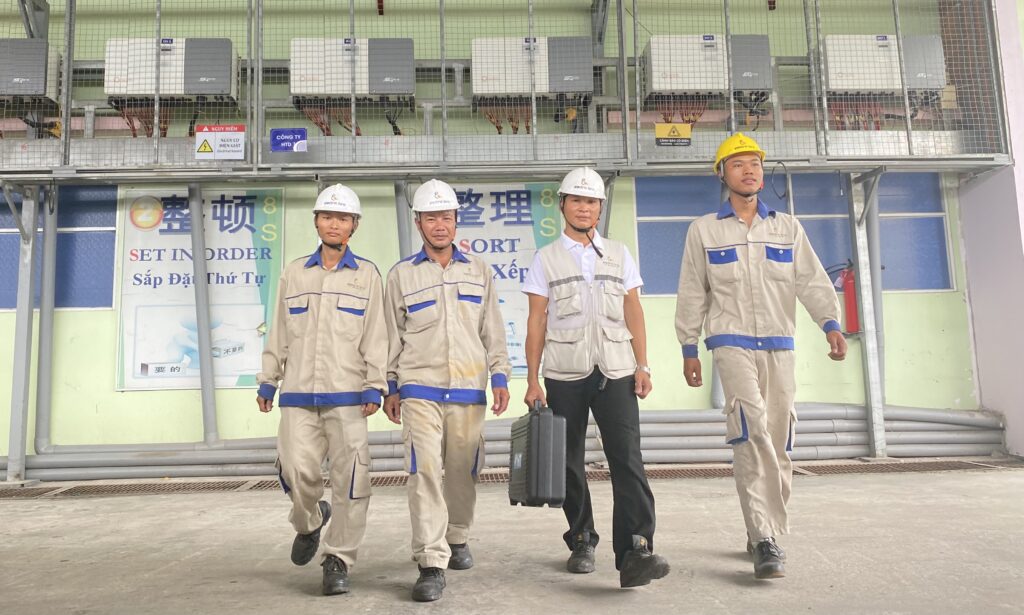
Explore how Electric Bird‘s industrial solar panels solutions can optimize your factory’s energy asset performance and ROI. Contact our team for a detailed technical consultation.
FAQ: Industrial Solar Panels for Factories
Do industrial solar panels require frequent cleaning?
Cleaning frequency should not be based on a fixed schedule. It must be calculated against an economic soiling loss threshold. Cleaning is triggered only when dust-induced yield reduction exceeds the cost of the cleaning operation, ensuring the maintenance spend is always economically justified.
What is the fault resolution time if a system issue occurs?
Professional O&M providers like Electric Bird define Response Time and Resolution Time through specific, contractually quantified SLA metrics rather than general assurances. Priority tiering is assigned by fault severity, with central inverter outages carrying the highest response priority.
How do I know if the system is experiencing performance degradation?
The absence of inverter alarms does not mean the system is performing to specification. Asset owners must continuously monitor and compare the PR (Performance Ratio) against the design baseline established during commissioning. Divergence from that baseline is the most reliable early indicator of emerging degradation.
How long does the full installation process take for a factory solar system?
For a project in the 1 MWp range, the total process from site survey to formal handover typically spans 10 to 16 weeks, depending on project complexity, roof condition, and the factory’s permitted construction windows.
What is the difference between solar panels for commercial buildings and full industrial-scale systems?
Solar panels for commercial buildings are typically designed for lower load profiles and simpler grid connection requirements. Industrial-scale systems require more rigorous structural engineering, higher-capacity inverter configurations, advanced SCADA integration, and formalized O&M contracts with quantified performance guarantees.