Solar O&M Cost Guide: Process & Budget Estimates [2026]

For most commercial and industrial asset owners, solar O&M costs represent roughly 1–2% of total CAPEX per year. That may sound modest. But get your operations and maintenance strategy wrong, and that small number quietly erodes 5–10% of annual energy yield, translating into real revenue loss across a 20–25 year asset life.
In this guide, we break down the full O&M process, what drives costs at each stage, and what realistic budget ranges look like for rooftop C&I systems and utility-scale solar farms in 2026.

The Standard Solar O&M Process: What It Actually Involves
A professional O&M program is not just scheduled cleaning. It is a structured asset management framework designed to detect performance degradation early, protect equipment lifespan, and maintain bankable yield data. Here is how a complete solar O&M cycle works:
1. Initial Site Assessment and Baseline Documentation
Before any maintenance plan is built, the O&M team reviews design drawings, inverter configurations, string layouts, and historical performance data. On-site electrical measurements are then taken to identify gaps between design performance and actual output. This baseline is the foundation of every subsequent O&M decision.
2. O&M Plan Development
Based on site conditions and system architecture, a tailored maintenance plan is established covering:
- Cleaning frequency and methodology
- Equipment inspection checklist and intervals
- Personnel allocation and safety protocols
- Monitoring thresholds and alert response procedures
Rooftop C&I systems and ground-mount utility plants require different approaches, particularly for access logistics, string count, and data architecture.

3. Continuous Performance Monitoring
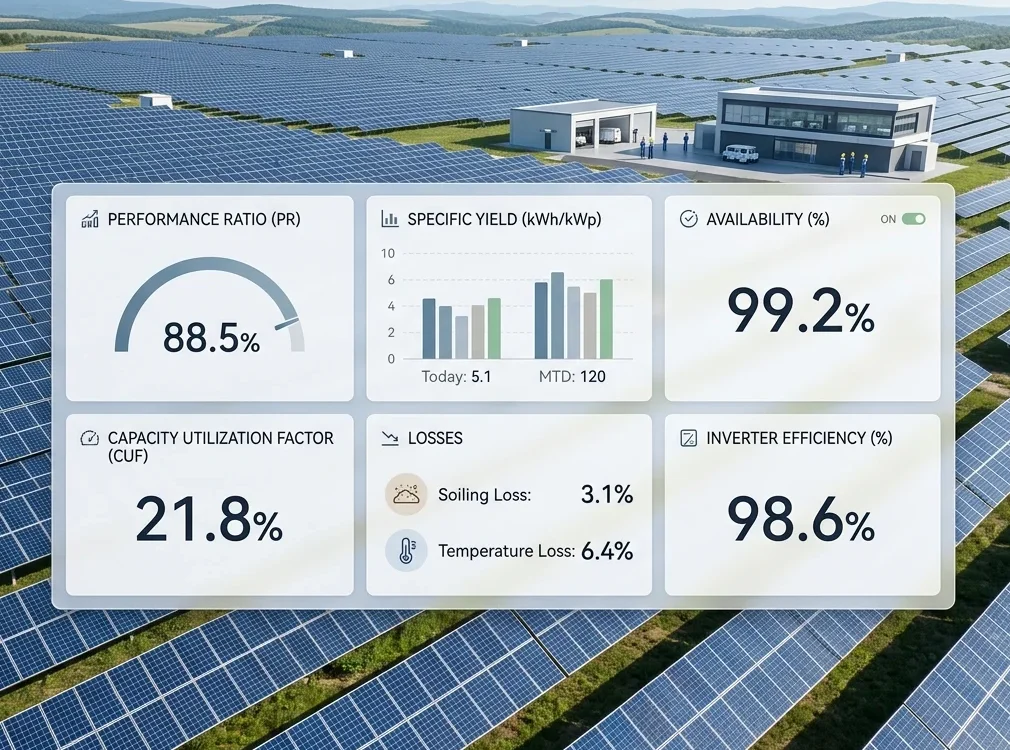
Real-time data from SCADA systems and inverter dashboards is the backbone of proactive solar O&M. Key performance indicators tracked continuously include Performance Ratio (PR), per-string yield, inverter fault codes, and temperature alerts. Catching a localized yield drop early, whether caused by soiling, shading, or mismatch, prevents minor efficiency losses from compounding into major downtime.
4. Scheduled Maintenance and Corrective Work
This is where most of the hands-on solar O&M costs are incurred. Core activities include:
- PV module cleaning to restore irradiance absorption and limit soiling-induced degradation
- DC/AC electrical inspection covering cables, combiner boxes, switchgear, and protection devices checked for overheating, loose connections, or resistive losses
- Inverter health assessment reviewing operating status, error logs, thermal performance, and conversion efficiency
- Earthing and lightning protection checks to ensure personnel safety and surge protection integrity
Alongside scheduled work, corrective maintenance under SLA commitments addresses unplanned faults through fault isolation, root cause analysis, and restoration with minimal downtime.
5. Post-Maintenance Testing and Performance Validation
After any maintenance intervention, system performance must be validated through technical testing. This step is what separates professional O&M from basic servicing. Standard post-maintenance tests include:
- Thermal imaging (thermography) to detect hotspots, faulty cells, or connection anomalies
- IV curve tracing to assess string-level current-voltage characteristics and identify degradation
- PID testing and micro-crack inspection on modules showing abnormal output decline
- Pre/post yield comparison to quantify the actual performance recovery achieved
6. Technical Reporting and Optimization Recommendations
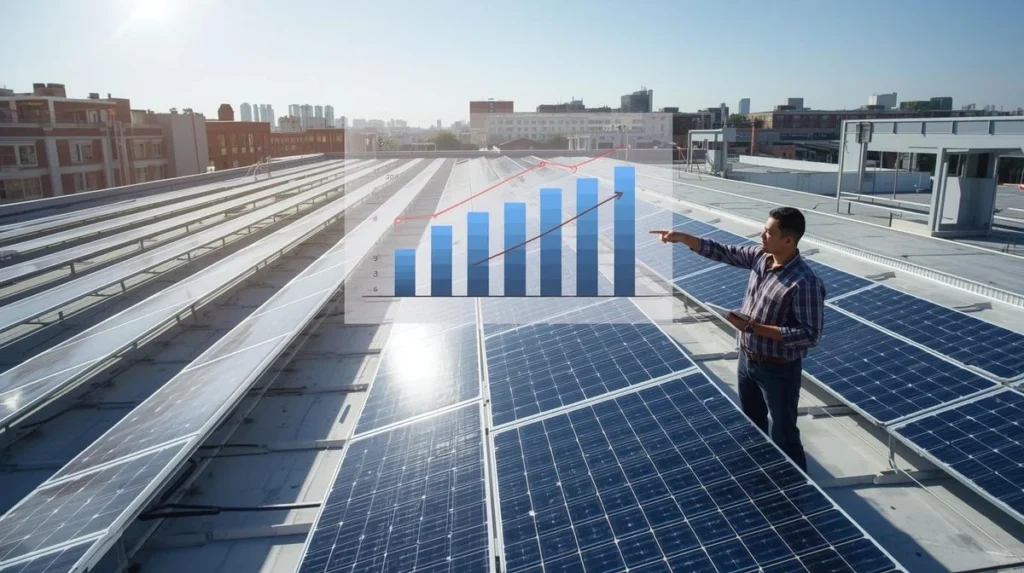
Every O&M cycle closes with a structured technical report delivered to the asset owner. A well-structured O&M report covers:
- Overall system health: PR trend, yield variance, degradation rate
- Completed maintenance tasks and findings
- Faults identified, root causes, and resolution details
- Post-maintenance test results
- Forward-looking optimization or equipment upgrade recommendations
For asset owners with multiple sites or financing obligations, this documentation is the audit trail that underpins asset valuation and lender reporting.
What Drives Solar O&M Costs? Key Variables for Budget Planning
Solar O&M costs are not fixed. They move depending on a range of technical and operational variables. Understanding these factors is the starting point for accurate budget forecasting.
System Capacity (kWp / MWp)
Larger systems benefit from economies of scale in O&M delivery. In practice, rooftop systems under 500 kWp typically carry O&M costs 5–15% higher per kWp than utility-scale plants above 1 MWp, because fixed mobilization costs are spread across fewer kilowatts.
Scope of O&M Contract
There is a significant cost difference between a basic O&M package (cleaning and periodic inspection) and a full-scope program that includes IV curve testing, thermographic surveys, and performance analytics. Reference price ranges:
- Basic O&M package: ~$1–2 USD/kWp/year
- Comprehensive O&M package: ~$3–6 USD/kWp/year

System Age and Condition
Systems that have not received proper maintenance for several years tend to carry a higher remediation burden. Field evidence from aging rooftop installations shows that 4–5 years of deferred maintenance can add 10–20% to first-year corrective costs due to accumulated hotspot damage, PID effects, and degraded connectors.
Advanced Testing and Diagnostic Equipment
Specialist diagnostics significantly increase service value and cost. Typical per-intervention benchmarks:
- Thermographic survey: ~$0.50–1.00 USD/kWp per visit
- IV curve testing: ~$1.00–3.00 USD/kWp per campaign
Site Access, Location, and Environment
High-dust industrial zones, coastal environments, and remote sites all require more frequent or more intensive servicing. For example:
- High-dust industrial sites typically require 3–4 cleaning cycles per year
- Coastal installations incur higher inspection frequency due to salt corrosion risk and structural review requirements
Contingency for Corrective Work
Beyond scheduled O&M, prudent asset owners budget for reactive maintenance including inverter replacement, connector refurbishment, and electrical system repairs. These costs are site-specific but should be factored into any long-term O&M budget model.
Benchmark O&M Costs by System Type [2026 Reference]
To make budgeting more concrete, here are common reference points for solar O&M costs by system scale:
| System Type | Basic O&M | Full-Scope O&M |
|---|---|---|
| Rooftop C&I, 1 MWp | ~$2,000–4,000 USD/year | ~$4,000–8,000 USD/year |
| Ground-mount, 50 MWp | ~$10–20 USD/kWp/year | ~$500,000–1,000,000 USD/year |
| Cleaning only (any scale) | ~$0.50–2.00 USD/kWp per visit | N/A |
As a rule of thumb, total solar O&M costs running at 1–2% of system CAPEX annually is a reasonable planning baseline. The more important benchmark, however, is yield impact: a well-executed O&M program can protect or recover 5–10% of annual energy production, a figure that compresses payback periods and supports stronger asset valuations.
How to Choose the Right Solar O&M Partner
Not every service provider has the technical depth to manage solar assets over a 20-year horizon. When evaluating O&M contractors, the following criteria are worth examining closely:
- Demonstrated track record on comparable system types and scales
- Clearly defined service scope, testing protocols, and diagnostic equipment used
- Structured technical reporting and performance optimization recommendations
- SLA commitments covering response time, uptime guarantees, and fault resolution targets
- Transparent communication, remote monitoring capability, and 24/7 alert coverage
For asset owners without in-house technical teams, partnering with an established solar O&M provider is typically the most cost-effective path, particularly as system complexity and scale increase.
Protecting Your Solar Asset Starts With the Right O&M Partner
Solar O&M costs are not an operating burden. They are the mechanism that protects the investment you have already made. A structured, data-driven O&M program maintains yield, extends equipment lifespan, and keeps your asset performing against its original financial model.
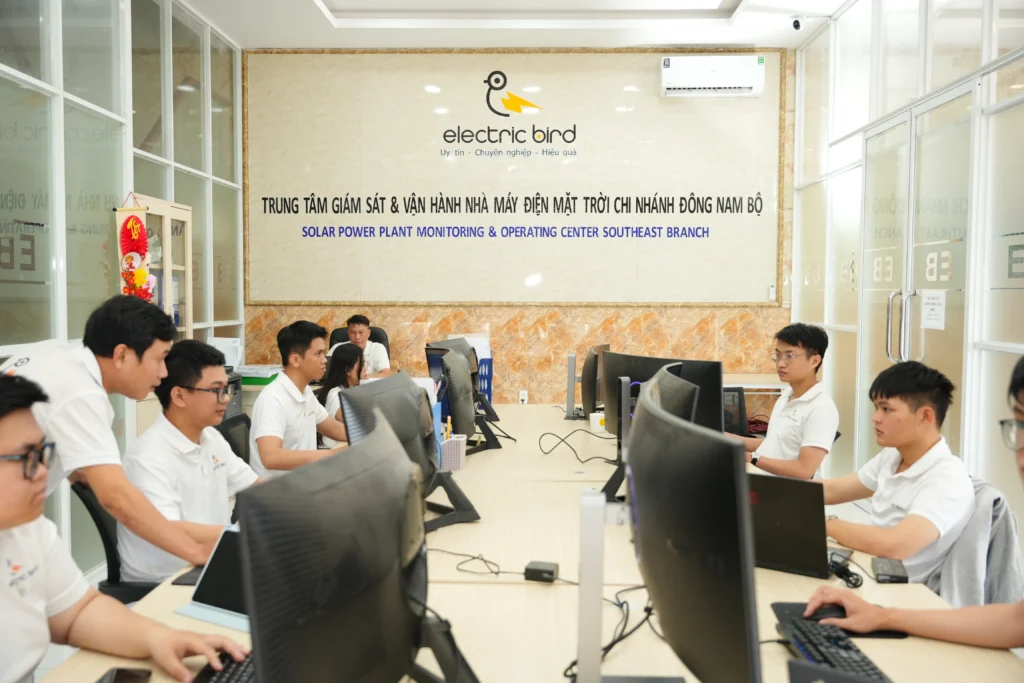
Electric Bird provides professional solar O&M services for rooftop C&I and utility-scale systems across Vietnam, combining 24/7 monitoring, standardized maintenance protocols, and transparent technical reporting.
Contact Electric Bird to discuss an O&M cost structure and service scope tailored to your system.
FAQ: Solar O&M Costs and Maintenance
How often should a solar system be maintained?
For most C&I rooftop systems, a maintenance cycle every 3–6 months is standard. Utility-scale plants benefit from monthly performance reviews, with full physical inspections at least twice per year. High-dust or coastal environments may require more frequent servicing.
Are solar O&M costs fixed or variable?
They are variable. Budget ranges depend on system size, contract scope, equipment condition, site environment, and whether specialist diagnostics are included. Use $1–6 USD/kWp/year as a planning range, then refine based on site-specific factors.
My system is still producing well. Does it really need regular maintenance?
Yes. Many performance-affecting issues, including early-stage hotspots, developing PID, micro-cracks, and loose DC connections, are not visible in daily yield data until they have already caused measurable degradation. Regular inspection catches these before they become costly.
What does a professional solar O&M scope typically include?
A comprehensive program covers module cleaning, DC/AC electrical inspection, inverter health assessment, earthing and protection checks, performance monitoring, thermographic and IV curve testing, fault response under SLA, and structured technical reporting.
Should asset owners outsource O&M or manage it in-house?
For most commercial asset owners without dedicated engineering teams, outsourcing to a qualified solar O&M provider delivers better technical depth, faster fault response, and lower risk, especially for systems above 500 kWp. In-house teams can be viable for large portfolios with dedicated resources but typically still require specialist support for advanced diagnostics.